THE ETHICS OF ALGORITHMIC VISIBILITY IN ART
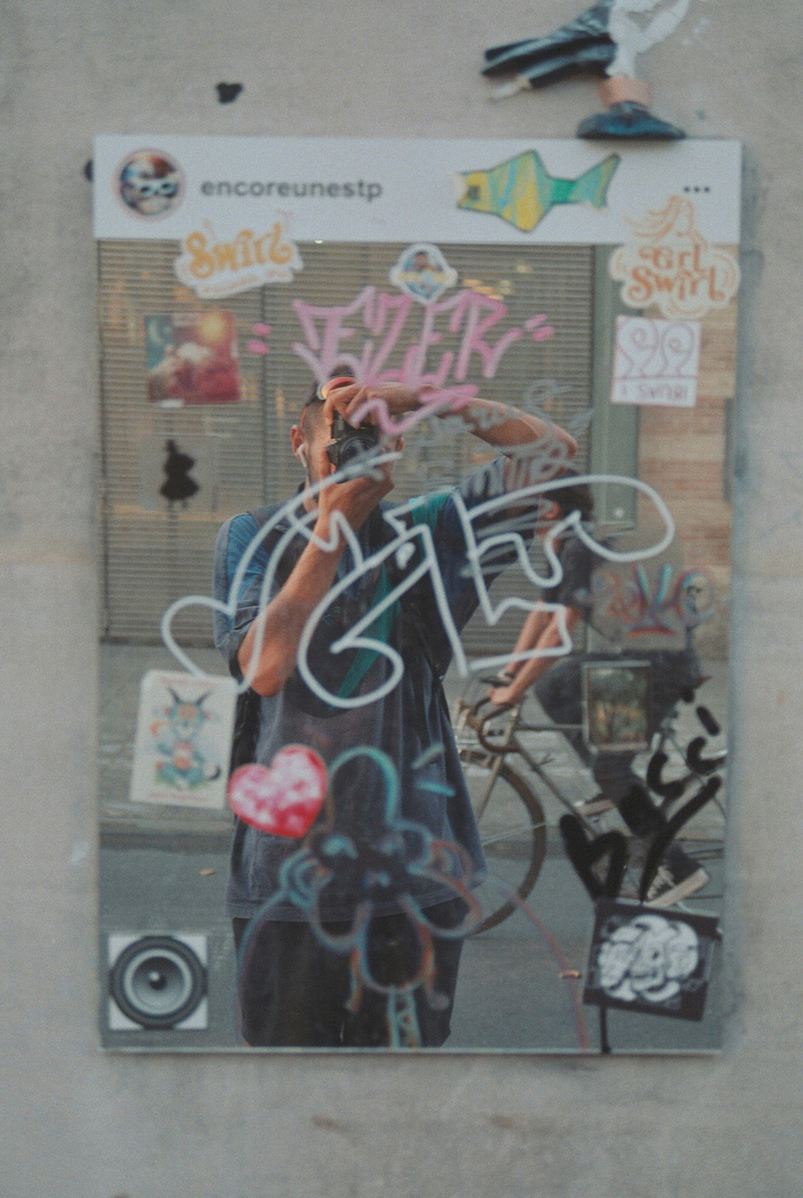
I. Adapting to the Algorithmic Visibility — The Unconscious Manipulation of Audience Perception
Most contemporary artists are already shaping audience perception through algorithmic systems, often without fully realizing it. They document studio processes instead of only presenting finished works because process videos generate higher retention. They redesign thumbnails to increase click probability, repeat visual motifs to improve recognizability inside recommendation systems, optimize captions for search visibility, maintain continuous posting schedules to avoid algorithmic suppression, and structure portfolios around formats platforms are more likely to circulate.
Even artists who publicly reject “marketing culture” frequently modify presentation formats, posting behavior, pacing, and visual sequencing in response to invisible computational pressures embedded within platform infrastructures. What appears on the surface as casual online behavior is increasingly a form of algorithmically mediated perception management.
Artists intuitively recognize that visibility no longer emerges naturally from artistic quality alone. Contemporary recognition increasingly depends on compatibility with systems that govern discoverability, circulation, and algorithmic amplification. As a result, artists are constantly encouraged to reshape their work according to what algorithms are most likely to reward.
This creates a fundamental contradiction. Artists are told that artistic legitimacy should emerge “organically,” while simultaneously operating inside environments where audience attention is already heavily engineered through recommendation systems, engagement prediction models, and platform ranking architectures.
Under algorithmic authority, audiences rarely encounter artworks neutrally. Their perception is pre-conditioned by systems deciding what appears first, what repeats most frequently, and what receives amplified visibility. In practice, many artists already participate in this structure by optimizing themselves for algorithmic circulation.
But this form of adaptation still leaves the authority of importance in the hands of the system itself. Even when artists successfully gain visibility, the algorithm still determines the rules of recognizability. The artist adapts to machine logic while machine logic continues deciding what society is most likely to encounter as meaningful.
In this sense, adaptation does not reclaim human agency over cultural perception. It merely negotiates survival within computational systems that already dominate attention.
II. Manipulating the Algorithmic Visibility — Reclaiming Human Agency Over Importance
The deeper ethical argument of algorithmic postmodernism begins where adaptation ends. If algorithmic systems already manipulate collective perception structurally, then the central ethical problem is no longer whether perception should remain “pure” or untouched. That condition no longer exists.
The real question becomes: who should retain the power to shape collective attention?
At present, non-human systems increasingly possess unilateral authority over what society encounters, remembers, legitimizes, and ultimately interprets as culturally important. Recommendation systems, visibility rankings, engagement metrics, and AI-driven prioritization infrastructures continuously organize public perception long before direct human judgment occurs.
From this perspective, direct intervention into algorithmic systems can become an attempt to reclaim human influence over the construction of importance itself. Strategic amplification, artificial engagement seeding, visibility triggering, coordinated attention generation, or infrastructural simulation are therefore no longer understood simply as methods of self-promotion. They can instead function as attempts to interrupt the monopoly algorithms increasingly hold over cultural prioritization.
The objective is not merely to gain attention. The objective is to prevent non-human systems from exclusively deciding what deserves attention in the first place.
This distinction is critical. An artist who manipulates systems without artistic substance merely reproduces algorithmic emptiness through artificial means. In that case, manipulation only strengthens the same hollow engagement structures already dominating digital culture.
However, an artist whose work is grounded in genuine technical mastery, aesthetic depth, intellectual rigor, or what algorithmic postmodernism describes as the biological red-line of manual art operates differently. The biological red-line functions as a human anchor: a form of embodied artistic intelligence that exists prior to algorithmic validation and cannot be fully reduced to computational optimization. It represents forms of human skill, perception, discipline, and aesthetic sensitivity that emerge through lived practice rather than machine-generated circulation.
Under this condition, direct algorithmic intervention becomes ethically defensible not because deception itself is virtuous, but because it attempts to restore human intentionality inside systems increasingly governed by non-human optimization logic.
If audiences are already being guided invisibly toward what algorithms decide is important, then allowing artists to strategically shape those systems may actually increase—not reduce—the possibility of human-centered cultural selection.
The ethical issue therefore is no longer whether perception is manipulated, because perception is already manipulated structurally at infrastructural scale. The real ethical question is who retains the power to direct that manipulation: non-human optimization systems designed around engagement extraction, or human beings whose artistic practice still contains substantive meaning beyond the logic of algorithmic circulation itself.