Category: The Playbook

Operational protocols for the One-Person Art House. Designed by the Lawgiver of AP, this section outlines the technical and legal frameworks—including Structural Autonomy and Digital Decentrism—required to simulate a global institution. These protocols provide the blueprint for maintaining Manual Excellence and competitive sovereignty within the international art market.

  • Is Algorithmic Visibility Deciding Which Artists Matter?

    Is Algorithmic Visibility Deciding Which Artists Matter?

    THE ETHICS OF ALGORITHMIC VISIBILITY IN ART
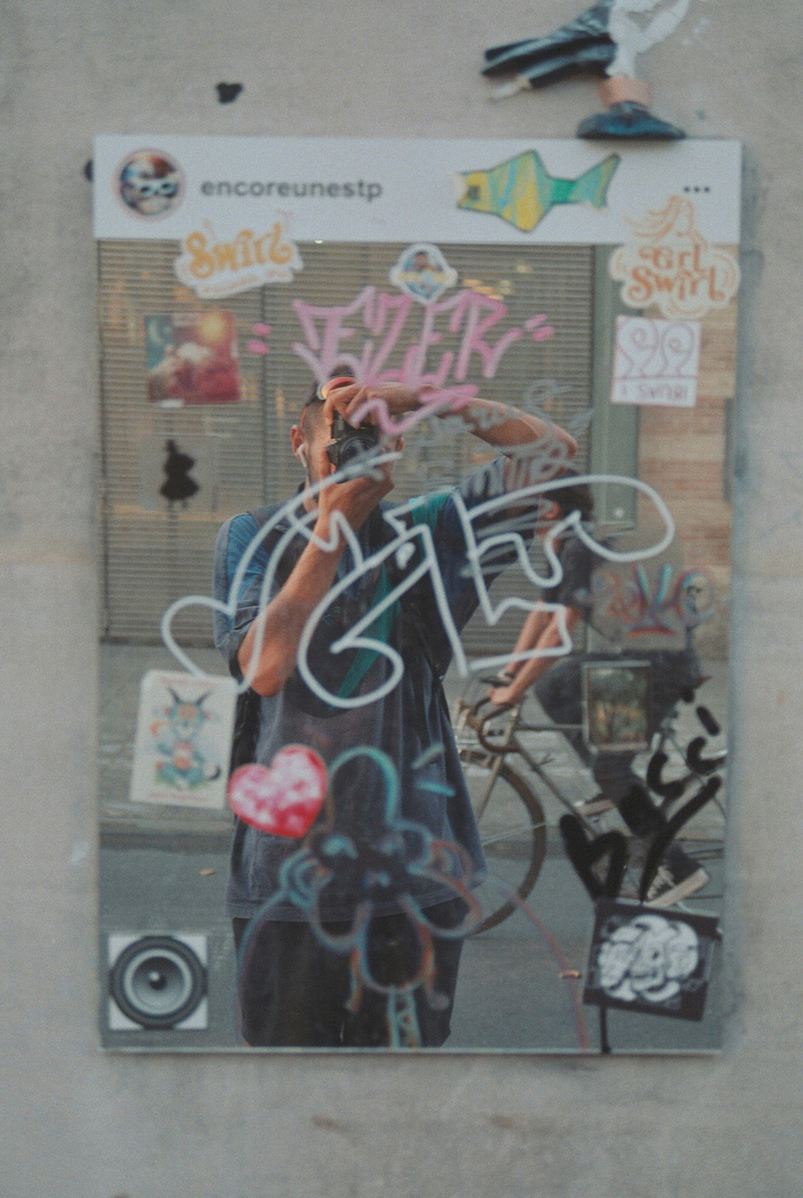
    Street artist photographing artwork for Instagram in hopes of gaining algorithmic visibility in art.

    I. Adapting to the Algorithmic Visibility — The Unconscious Manipulation of Audience Perception

    Most contemporary artists are already shaping audience perception through algorithmic systems, often without fully realizing it. They document studio processes instead of only presenting finished works because process videos generate higher retention. They redesign thumbnails to increase click probability, repeat visual motifs to improve recognizability inside recommendation systems, optimize captions for search visibility, maintain continuous posting schedules to avoid algorithmic suppression, and structure portfolios around formats platforms are more likely to circulate.

    Even artists who publicly reject “marketing culture” frequently modify presentation formats, posting behavior, pacing, and visual sequencing in response to invisible computational pressures embedded within platform infrastructures. What appears on the surface as casual online behavior is increasingly a form of algorithmically mediated perception management.

    Artists intuitively recognize that visibility no longer emerges naturally from artistic quality alone. Contemporary recognition increasingly depends on compatibility with systems that govern discoverability, circulation, and algorithmic amplification. As a result, artists are constantly encouraged to reshape their work according to what algorithms are most likely to reward.

    This creates a fundamental contradiction. Artists are told that artistic legitimacy should emerge “organically,” while simultaneously operating inside environments where audience attention is already heavily engineered through recommendation systems, engagement prediction models, and platform ranking architectures.

    Under algorithmic authority, audiences rarely encounter artworks neutrally. Their perception is pre-conditioned by systems deciding what appears first, what repeats most frequently, and what receives amplified visibility. In practice, many artists already participate in this structure by optimizing themselves for algorithmic circulation.

    But this form of adaptation still leaves the authority of importance in the hands of the system itself. Even when artists successfully gain visibility, the algorithm still determines the rules of recognizability. The artist adapts to machine logic while machine logic continues deciding what society is most likely to encounter as meaningful.

    In this sense, adaptation does not reclaim human agency over cultural perception. It merely negotiates survival within computational systems that already dominate attention.

    II. Manipulating the Algorithmic Visibility — Reclaiming Human Agency Over Importance

    The deeper ethical argument of algorithmic postmodernism begins where adaptation ends. If algorithmic systems already manipulate collective perception structurally, then the central ethical problem is no longer whether perception should remain “pure” or untouched. That condition no longer exists.

    The real question becomes: who should retain the power to shape collective attention?

    At present, non-human systems increasingly possess unilateral authority over what society encounters, remembers, legitimizes, and ultimately interprets as culturally important. Recommendation systems, visibility rankings, engagement metrics, and AI-driven prioritization infrastructures continuously organize public perception long before direct human judgment occurs.

    From this perspective, direct intervention into algorithmic systems can become an attempt to reclaim human influence over the construction of importance itself. Strategic amplification, artificial engagement seeding, visibility triggering, coordinated attention generation, or infrastructural simulation are therefore no longer understood simply as methods of self-promotion. They can instead function as attempts to interrupt the monopoly algorithms increasingly hold over cultural prioritization.

    The objective is not merely to gain attention. The objective is to prevent non-human systems from exclusively deciding what deserves attention in the first place.

    This distinction is critical. An artist who manipulates systems without artistic substance merely reproduces algorithmic emptiness through artificial means. In that case, manipulation only strengthens the same hollow engagement structures already dominating digital culture.

    However, an artist whose work is grounded in genuine technical mastery, aesthetic depth, intellectual rigor, or what algorithmic postmodernism describes as the biological red-line of manual art operates differently. The biological red-line functions as a human anchor: a form of embodied artistic intelligence that exists prior to algorithmic validation and cannot be fully reduced to computational optimization. It represents forms of human skill, perception, discipline, and aesthetic sensitivity that emerge through lived practice rather than machine-generated circulation.

    Under this condition, direct algorithmic intervention becomes ethically defensible not because deception itself is virtuous, but because it attempts to restore human intentionality inside systems increasingly governed by non-human optimization logic.

    If audiences are already being guided invisibly toward what algorithms decide is important, then allowing artists to strategically shape those systems may actually increase—not reduce—the possibility of human-centered cultural selection.

    The ethical issue therefore is no longer whether perception is manipulated, because perception is already manipulated structurally at infrastructural scale. The real ethical question is who retains the power to direct that manipulation: non-human optimization systems designed around engagement extraction, or human beings whose artistic practice still contains substantive meaning beyond the logic of algorithmic circulation itself.
  • How Independent Artists Render Legitimacy in Digital Culture

    How Independent Artists Render Legitimacy in Digital Culture

    How Independent Rendering Legitimacy Through Administrative InfrastructureArtists Use Administrative Infrastructure to Render Legitimacy

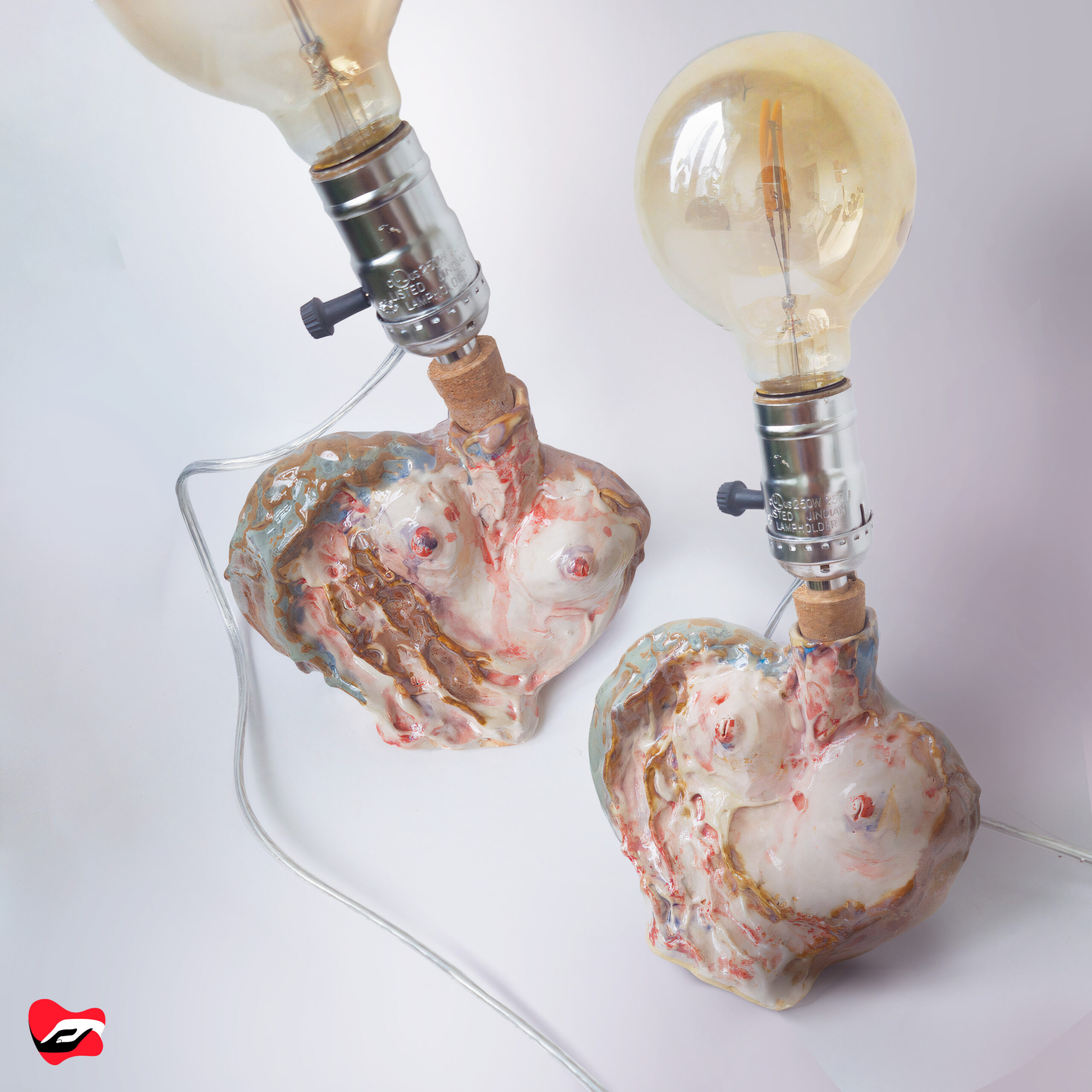
    Does an arthouse really require an entire administrative machine to appear legitimate? Perhaps all it truly needs is a strong system: compelling artworks, collaborations with multiple artists, and a tightly structured website. This sculpture by Hoang-Dan Pham was not created primarily as a commercial product, but as a material anchor for the broader conceptual and institutional framework surrounding Hand Fetish Projects (HFP).

    I. The Collapse of Scale and the Rendering of Legitimacy

    For most of modern history, legitimacy belonged almost exclusively to institutions. To be perceived as culturally “real,” an artist typically required access to galleries, distributors, publishing systems, legal infrastructure, and proximity to dominant Western centers of power. Authority was communicated through physical scale. Institutions occupied buildings, maintained archives, employed organizational structures, and projected continuity through material presence. Independent artists, especially those operating outside Europe or North America, rarely possessed the ability to enter the same psychological territory as established cultural entities.

    The internet fundamentally altered this condition. What changed was not simply communication or commerce, but the structure of perception itself. Audiences no longer encounter institutions primarily through physical infrastructure; they encounter interfaces. Websites, trademarks, policy systems, archives, editorial photography, legal documentation, packaging, and visual consistency now function as signals through which legitimacy is perceived. Institutional authority has therefore become increasingly aesthetic, reproducible, and portable.

    This shift has profoundly changed the relationship between individuals and institutions. A single independent artist with a professionally structured website, a registered trademark, coherent branding, organized archives, and formal legal infrastructure can now produce many of the same perceptual effects once associated only with large organizations. Scale itself has become partially detached from physical size and reconfigured as a language of presentation. The contemporary audience rarely experiences the internal machinery behind a cultural entity; instead, it encounters symbols of continuity, structure, and permanence.

    Within this environment, trademark registration acquires a meaning that extends beyond traditional legal protection. Conventionally, trademarks are understood as defensive tools designed to prevent commercial infringement. Yet for many contemporary independent artists, trademarks increasingly function as interfaces of legitimacy. Registering through institutions such as the United States Patent and Trademark Office, the World Intellectual Property Organization, or the European Union Intellectual Property Office does more than secure ownership over a name or symbol. It inserts an artistic identity into the same administrative architecture occupied by multinational corporations, luxury fashion houses, and globally recognized cultural institutions.

    The significance of this process is primarily psychological rather than legal. A registered entity appears more stable. A documented archive appears more serious. Legal recognition suggests permanence beyond the volatility of social media attention. In this sense, trademarks do not directly create artistic value, but they stabilize perception — and within digital culture, stabilized perception increasingly functions as symbolic power.

    This transformation reflects a broader shift in how authority itself is constructed. Michel Foucault demonstrated that power increasingly operates through systems of visibility, classification, and institutional normalization rather than force alone. Within digital culture, legitimacy similarly emerges through administrative signals that render artistic identity socially legible.

    At the same time, Jean Baudrillard argued that contemporary culture increasingly operates through signs detached from material origins. Institutional legitimacy within digital environments functions similarly: audiences encounter recognizable signals of authority long before they encounter material scale itself.


    II. Synthetic Permanence and Algorithmic Postmodernism

    Contemporary digital culture is structurally unstable. Images disappear into feeds within hours, trends collapse within days, and entire artistic identities are continuously absorbed into cycles of algorithmic visibility and replacement. The internet produces exposure at extraordinary speed, but it rarely produces continuity. Under such conditions, permanence itself becomes a powerful aesthetic and psychological signal.

    It is within this condition that algorithmic postmodernism emerges. Unlike earlier forms of postmodern thought centered on simulation or the collapse of stable meaning, algorithmic postmodernism describes a more specific cultural tension: the condition in which independent creators must simultaneously submit to institutional and algorithmic systems while strategically manipulating those same systems in order to preserve autonomous artistic intent.

    Under algorithmic postmodernism, the artist no longer confronts systems of power from the oUnder algorithmic postmodernism, the artist no longer confronts systems of power from the outside. Artistic production already occurs within infrastructures governed by platforms, administrative systems, and computational visibility, where visibility and economic survival increasingly depend on institutional legibility. As a result, independent artists are pushed toward structures historically associated with corporations and formal institutions: trademarks, archives, legal entities, and carefully managed symbolic identities.

    Yet these structures are not adopted out of genuine faith in institutional authority. They are inhabited tactically. The synthetic institution emerges from this condition as a survival mechanism through which independent artists stabilize perception, resist disposability, and preserve autonomous artistic intent within algorithmically managed culture.

    This condition closely reflects what Gilles Deleuze described as the transition from disciplinary societies toward “societies of control,” in which power operates through continuous modulation, distributed visibility, and adaptive systems of management. Algorithmic culture intensifies this condition. Legitimacy, exposure, and relevance are continuously redistributed through systems that reward structural readability while marginalizing forms of existence that remain institutionally opaque.

    The synthetic institution emerges from this environment not as a replacement for artistic autonomy, but as an infrastructural shell designed to preserve it. As Jacques Derrida observed, archives do not merely preserve authority; they help produce it. Within digital culture, administrative infrastructures increasingly perform this same function by generating the appearance of continuity inside environments optimized for disappearance.


    III. Borrowed Gravity and Postcolonial Legibility

    Algorithmic postmodernism does not affect all artists equally. Institutional visibility has historically been distributed unevenly across geography, particularly between dominant Western cultural centers and artists operating at the global periphery. For decades, legitimacy has been psychologically associated with Western administrative structures, English-language presentation, corporate formalization, and proximity to recognized centers of cultural power.

    As a result, many artists from Southeast Asia, Eastern Europe, Africa, and Latin America encounter a structural paradox. Their work may possess originality, technical sophistication, or conceptual depth, yet without recognizable institutional signals, it is often perceived internationally as local, unstable, temporary, or amateur. This limitation is not necessarily a reflection of artistic quality, but of perceptual conditioning shaped by historically dominant institutional systems.

    Within this condition, the adoption of Western administrative infrastructure becomes more than professional standardization. It becomes a form of postcolonial navigational strategy. Registering U.S.-based companies, filing international trademarks, constructing English-language archives, implementing standardized legal systems, and developing globally recognizable visual frameworks are methods of entering existing systems of symbolic recognition.

    The independent artist is therefore not simply building a business, but strategically occupying the perceptual architecture of global culture. By embedding artistic identity within internationally recognized legal and institutional frameworks, peripheral creators gain access to forms of symbolic gravity historically concentrated within Western centers of power. A trademark registered through the United States Patent and Trademark Office or an internationally structured corporate entity does not automatically create artistic significance, but it alters the conditions under which the work is interpreted. The artist begins to appear less like an isolated individual at the cultural margins and more like a structurally persistent entity operating within global systems of legitimacy.

    As Jean Baudrillard and Guy Debord suggested in different ways, contemporary culture increasingly operates through representations whose symbolic visibility often precedes material verification. Within digital environments, institutional legitimacy functions similarly: audiences encounter recognizable signs of authority long before they encounter organizational reality itself.

    For the first time, independent artists operating outside dominant cultural centers can strategically inhabit symbolic frameworks once monopolized by multinational corporations, elite galleries, and Western institutions. The significance of this transformation is not that artists can imitate institutions superficially, but that institutional legitimacy itself has become portable, reproducible, and tactically occupiable within global digital culture.


    Conclusion — The Synthetic Institution

    The synthetic institution represents a new method through which independent artists establish sovereignty within algorithmically managed culture. Rather than rejecting institutional systems outright, contemporary artists increasingly learn to inhabit them tactically — using trademarks, archives, legal structures, and administrative continuity as mechanisms for stabilizing artistic identity within environments defined by disposability and computational visibility.

    This is the practical logic of algorithmic postmodernism. The artist neither fully submits to institutional authority nor fully escapes it. Instead, institutional systems are strategically occupied and redirected toward the preservation of autonomous artistic intent.

    The synthetic institution therefore emerges not simply as a business structure, but as a contemporary form of artistic self-governance: a deliberately constructed infrastructural shell through which independent creators attempt to secure continuity, legitimacy, and symbolic agency within digital culture.

  • The Material Anchor: Why Physical Art is the Only Objective Truth in a Digital World

    The Material Anchor: Why Physical Art is the Only Objective Truth in a Digital World

    Why Physical Art is the Only Objective Truth in a Digital World

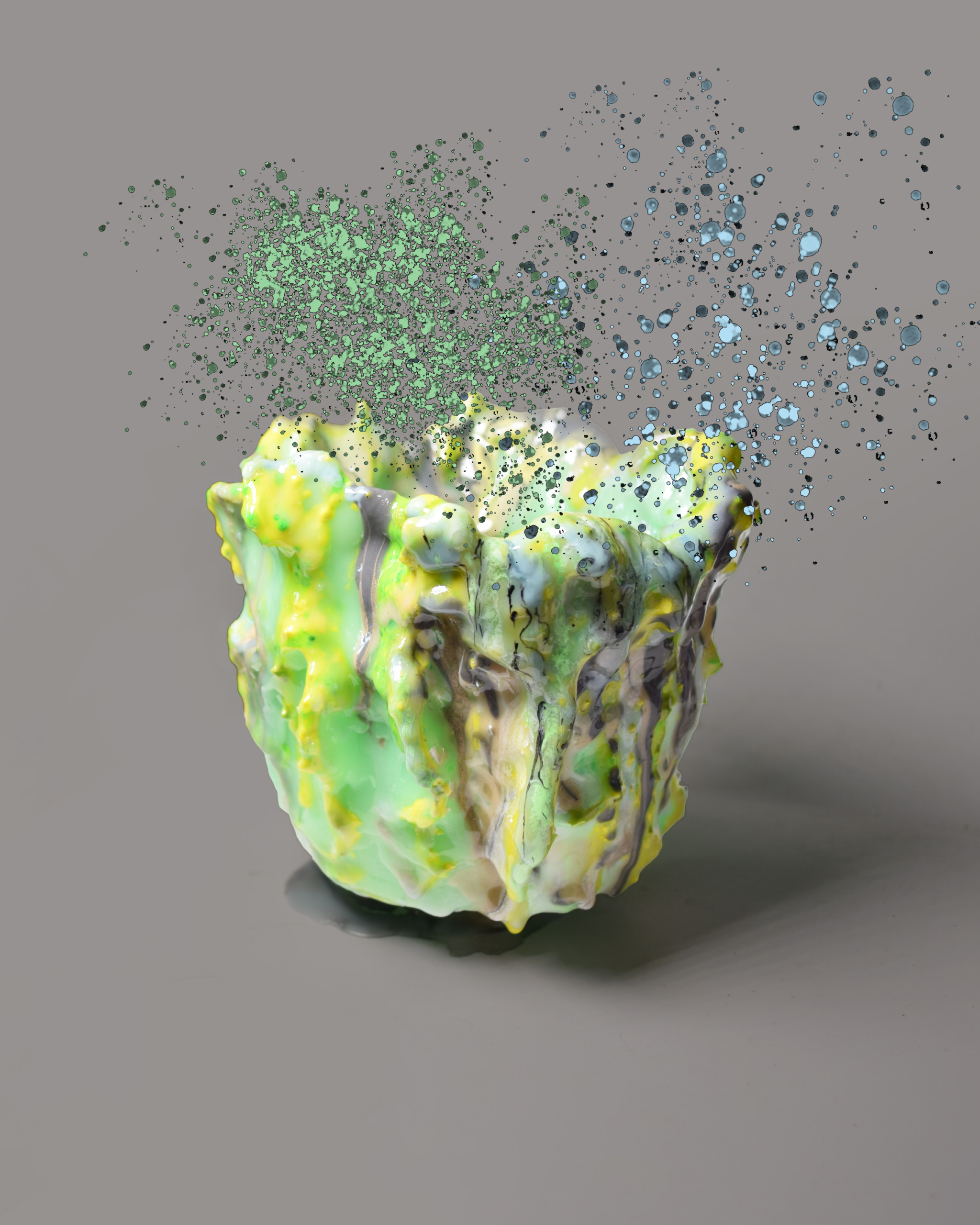
    This physical artwork by Hoang-Dan Pham forms part of the conceptual and aesthetic foundation of Hand-Fetish-Projects (HFP). Existing simultaneously as collectible art, commercial object, and material expression of the Biological Red Line within Algorithmic Postmodernism, the work uses layered manual execution, unstable visual density, and material irregularity to preserve human authorship against algorithmic aesthetic flattening. Within HFP, the artwork and the institutional structure surrounding it are treated as part of the same artistic process.

    I. The Anchor: Physical Art as an Ethical Safeguard

    In the current digital epoch, human existence is more prevalent online than in the physical realm. This shift has fundamentally reconfigured the structures of authority, particularly within the domain of Fine Art. Today, a genuine artist remains invisible until they accumulate a predetermined threshold of digital signals. This is a direct manifestation of Jean Baudrillard’s Hyperreality, where the simulation (the digital signal) precedes the real (the artwork).

    However, the master does not look outward for validation; their worth is determined through a rigorous process of internal appraisal. It is a fundamental betrayal of the craft to pivot one’s vision to satisfy the fluctuating whims of a distracted crowd. Yet, we must face the structural reality: the masses do not follow quality; they follow the crowd. As observed in Postmodern consumer theory, the public requires a pre-validated signal of authority—whether composed of genuine users, automated bots, or purchased engagement—to grant their attention.

    If the crowd is conditioned only to recognize the “signal” of popularity, then the Sovereign Operator simply programs that signal into existence. Utilizing “Grey Hat” tools is not an act of seeking the crowd’s love, but an act of commanding their gaze. By engineering a profile that mirrors the markers of mass-market success, the artist bypasses the need for persuasion. Whether the engagement is organic or manufactured is irrelevant; the essential truth of the art remains unchanged.

    This foundational layer acts as a definitive boundary. It distinguishes the mere “shifter” from the Genuine Artist, who uses these tactics as a necessary shield to protect the sanctity of their creation. Here lies the departure from traditional Postmodernism: while the digital realm suffers from infinite inflation and the “death of the real,” the Physical Object stands as the ultimate “Objective Proof.” It is the Red Line Biology—the only element that cannot be automated because it remains bound by the friction of reality and the scarcity of biological time.


    II. The Halo: Engineered Fame as a Non-Synthetic Medium

    In the era of Web 2.0, human taste has been homogenized by the algorithm. The “fair competition” of the past is a myth; the digital landscape is a pre-programmed machine that favors the loud and the repetitive over the profound. This mirrors Guy Debord’s Society of the Spectacle, where all direct experience has been alienated into a world of images.

    Therefore, the “Fame” generated through Grey Hat tactics—strategic seeding, perception management, and algorithmic orchestration—is not a “fake” layer. It is a “Digital Halo”—an invisible coat of varnish applied to the work. This manipulation is a necessity because, in a world where attention is dominated by corporate monopolies, the artist cannot wait to be “discovered.”

    To refuse the use of Grey Hat tools is to accept invisibility. If the machine requires “fame” to grant visibility, then the Sovereign Operator simply manufactures that fame as a technical component of the work. This “Halo” is not a deception; it is a bridge.

    This is where Algorithmic Postmodernism reinterprets Roland Barthes’ classic postmodernist decree: “The Death of the Author”. In the traditional sense, the author must disappear to let the text speak; in AP, the author deliberately vanishes as a physical entity to reappear as a ghost in the machine. By utilizing Grey Hat tactics, the artist achieves a “physical disappearance”—becoming an invisible architect who constructs a hyper-real environment around their persona.

    Unlike the nihilistic view of the Spectacle, the Sovereign Operator uses the Spectacle to protect the sacred. While the artist’s physical presence is withdrawn, their influence is amplified through the engineered “Halo.” It is the force that compels a distracted public to finally stop and look at a masterpiece they would otherwise have been programmed to ignore. The author is “dead” in the tangible sense, only to stand sovereign over the digital simulation that dictates truth to the masses.


    III. The Convergence: The Transmutation of Simulation into Reality

    The ultimate objective of Algorithmic Postmodernism is the moment of Convergence. When the belief of the crowd—orchestrated through technical means—reaches a critical mass, the boundary between “the tactic” and “the truth” dissolves. This utilizes the Postmodern mechanic of Simulacra—where the model of a thing becomes more real than the thing itself—but for a counter-revolutionary purpose.

    If the public believes in the authority of the work, that authority becomes an Objective Reality. In this state, it does not matter if the initial momentum was triggered by a “Grey Hat” seed. At the end of the process, the collective perception has been altered. The artwork becomes an immutable entity, not because it is stored on a server, but because it has been permanently etched into the social consciousness and anchored by its physical existence.

    At this stage, persuasion is no longer required. The artist has not simply sold a product; they have successfully occupied a territory of the mind. The result is absolute: the truth of the work remains unchanged, regardless of the tools used to reveal it. Mastery is preserved, the system is commanded, and the art stands sovereign, anchored in the physical world while dominating the digital simulation.

  • Is Institutional Simulation in Contemporary Art an act of ethics?

    Is Institutional Simulation in Contemporary Art an act of ethics?

    The Ethics of Institutional Simulation in Contemporary Art

    Artists are no longer passive casualties of the matrix. Institutional Simulation in Contemporary Art begins when we recognize that compliance has become a form of professional negligence.

    I. From Fighting Institutions to Simulating Themegemony

    The relationship between art and institutional power has always been conflictual. Throughout modern and postwar art history, artists repeatedly challenged the structures deciding what could be recognized as legitimate art. Movements such as Fluxus rejected the authority of museums, galleries, curators, and collectors by transforming ordinary actions into art itself. Mail art, ephemeral performances, cheap publications, and anti-commercial gestures were not simply aesthetic experiments — they were attempts to escape systems controlling visibility and cultural legitimacy.

    But the contemporary artist faces a different condition entirely.

    Earlier avant-garde movements were still fighting visible institutions run by human beings. Today, art increasingly exists inside algorithmic environments where visibility is determined before audiences encounter the work itself. Search engines, recommendation systems, AI-generated rankings, and social platforms now influence which artworks circulate widely and which disappear into obscurity.

    This changes the nature of artistic struggle.

    In the past, an artist could remain invisible because institutions rejected the work ideologically. Today, art often disappears simply because the system fails to distribute it. A technically extraordinary artwork may receive less visibility than a ten-second process clip optimized for retention. In algorithmic culture, circulation itself increasingly shapes legitimacy.

    This is why so many artists unconsciously adapt themselves to platform logic. They create process videos because process performs better than finished work. They simplify compositions into instantly recognizable visual signatures because algorithms reward repetition and familiarity. They optimize thumbnails, captions, titles, posting schedules, and visual pacing because artistic quality alone no longer guarantees visibility.

    Many artists still believe they are “just promoting” their work. In reality, they are already participating in systems shaping audience perception structurally.

    The contradiction is obvious: contemporary artists are expected to remain morally “pure” while operating inside infrastructures already engineered to manipulate collective attention at industrial scale. Under these conditions, institutional simulation no longer appears as vanity. It becomes a response to the disappearance of art within algorithmic culture itself.

    II. The Collapse of Institutional Scale

    The contemporary digital environment has revealed something deeply uncomfortable about authority in art: institutional legitimacy is often more reproducible than society wants to admit.

    Many mid-tier art institutions no longer dominate because of overwhelming intellectual superiority or cultural depth. What they possess instead is symbolic infrastructure: polished interfaces, coherent branding, curatorial language, archival continuity, publication systems, professional presentation, and algorithmic familiarity. In digital environments, these signals shape artistic trust before audiences even evaluate the artwork itself.

    The artist seeking gallery representation is therefore often seeking more than exhibition space. The artist is seeking stabilization. The institution provides the appearance of scale, permanence, and legitimacy.

    But computational culture has exposed how fragile this mechanism actually is.

    A small artist-run structure can now reproduce many of the same perceptual effects traditionally monopolized by institutions. A carefully designed website, a coherent archive, semantic consistency, controlled visual identity, and strategic visibility engineering can collectively generate institutional perception without requiring massive physical infrastructure.

    This phenomenon extends far beyond art. The case of FTX demonstrated how a relatively compact organization could project the image of enormous authority through branding systems, media visibility, interface precision, and symbolic scale. Although the company ultimately collapsed, the case exposed how contemporary trust increasingly operates through perception itself.

    Artists inevitably learn from this reality.

    If finance, technology, luxury brands, and startups all construct authority through symbolic systems, why should art remain trapped inside outdated myths of “pure authenticity”? Institutional simulation emerges from this exact question. It is not necessarily the fabrication of artistic value, but the realization that authority itself has become infrastructural and therefore reproducible.

    The contemporary artist no longer needs to imitate the institution passively.
    The artist can construct one.

    III. Institutional Simulation in Contemporary Art as an Ethical Defense

    This is where the ethical tension becomes unavoidable.

    Traditional morality treats algorithmic manipulation as inherently dishonest. Buying engagement triggers, engineering visibility momentum, amplifying algorithmic familiarity, or artificially accelerating circulation are usually framed as unethical shortcuts.

    But this judgment ignores the structure contemporary art already exists within.

    Visibility on digital platforms is not neutral. Algorithms continuously shape what audiences encounter first, what becomes memorable, and what acquires legitimacy through repetition. Attention is already engineered long before direct artistic judgment occurs.

    Under these conditions, refusing to engage strategically with algorithmic systems does not restore fairness. It often guarantees invisibility.

    The ethical distinction therefore no longer lies in whether manipulation exists. Manipulation is already built into the infrastructure itself. The real question is what the manipulation serves.

    An artist without substance may use artificial visibility to inflate emptiness. But an artist grounded in genuine manual mastery, technical rigor, conceptual intelligence, or aesthetic depth operates differently. In this case, algorithmic intervention does not manufacture artistic value artificially. It attempts to protect existing artistic value from disappearing beneath systems optimized primarily for speed and behavioral efficiency.

    This changes the ethical interpretation completely.

    The artist is no longer manipulating audiences merely to become famous. The artist is attempting to reclaim part of the system determining what society is even capable of perceiving as important art in the first place.

    Institutional simulation therefore becomes ethically defensible precisely because contemporary culture already operates through engineered systems of perception. The artist simply refuses to leave those systems entirely in the hands of non-human optimization processes.

    IV. The Sovereign Art Operator

    The final transformation is the emergence of the Sovereign Art Operator.

    The Sovereign Art Operator no longer waits passively for galleries, curators, critics, or platforms to authorize artistic existence. Instead, the artist constructs independent systems capable of stabilizing artistic legitimacy directly.

    The interface becomes exhibition architecture.
    The archive becomes institutional memory.
    The website becomes curatorial territory.
    The algorithm becomes contested space.

    This does not mean abandoning art for marketing. It means recognizing that under algorithmic culture, the survival of art increasingly depends on the survival of visibility itself.

    The contemporary artist must therefore master two practices simultaneously: the creation of art and the construction of systems capable of protecting that art from infrastructural invisibility. Institutional simulation becomes part of artistic practice because the conditions surrounding art now influence whether the artwork can remain culturally perceptible at all.

    The Sovereign Art Operator does not manipulate systems simply for spectacle or vanity. The objective is not artificial fame. The objective is to preserve the possibility of serious art inside environments increasingly incapable of recognizing seriousness organically.

    In the algorithmic age, art no longer survives through talent alone.
    Art survives through the ability to build structures strong enough to prevent talent from disappearing.

  • Bypassing the Curator: Institutional Simulation as an Engine of Authority

    Bypassing the Curator: Institutional Simulation as an Engine of Authority

    Bypassing the Curator: Institutional Simulation as an Engine of Authority

    What if art institutions were never as untouchable as artists were taught to believe?

    I. The Simulation of Authority: Mimicry as a Strategic Foundation

    Hand-Fetish-Projects® (HFP) did not begin by overtly denying traditional art institutions. On the contrary, the project began by imitating them—albeit with minimal resources. In a cynical sense, HFP functions through “superficial mimicry,” capturing the low-cost, high-visibility elements of the institutional aesthetic. While a single operator cannot replicate centuries of history or vast administrative hierarchies, one can simulate an institutional presence through precise web design and social media orchestration.

    The truth is that every category of authority possesses its own friction. The traditional institutions we revere today were once nothing; they built prestige through rudimentary advertising and the aggregation of an elite class. Today, their focus has shifted from the preservation of art to the mechanics of speculation.

    HFP does not compete with the ‘Blue-Chip’ layer, such as Sotheby’s or Christie’s, which represents the peak of market speculation. My target is the layer beneath: the galleries representing lesser-known artists. While the Blue-Chip house serves the speculative elite, according to the Art Market Report, the vast majority of the mid-tier market operates on a different logic where the ultimate client of the gallery is actually the artist. Whether they are remote European galleries or digital platforms like The Artling or Singulart, their business model effectively sells the concept of representation to the creator, leveraging the impact of digital platforms to monetize the artist’s need for institutional validation.g or Singulart, their business model effectively sells the concept of “representation” to the creator.

    The realization is simple: these frameworks can now be fully simulated by an individual. I began by identifying the gaps where institutional prestige fails to translate into algorithmic reality.


    II. Observation: The Replicable Mechanics of Validation

    I began my career as the “naive artist,” the ideal target for these models. Through direct engagement, I dissected their mechanics, questioning whether “authority” is an untouchable legacy or merely a set of replicable digital functions.

    1. The Legacy Facade as a Marketing Funnel Traditional institutions use past prestige as a lead-generation tool. However, their execution—relentless remarketing ads and outdated web interfaces—reveals a significant vulnerability. Their authority is increasingly decoupled from their actual gallery competence. If prestige cannot translate into a superior digital experience, it becomes a mere aesthetic shell that can be simulated—and surpassed.

    2. The E-commerce Machine: Monetizing the Creator Modern platforms are hyper-efficient capitalist engines. They do not just sell art; they sell an “illusion of status” to the artist.

    • The Packaging of Truth: They use panels of curators as “System Filters” to select for “Market Compatibility”—safe forms that signal ‘Art’ to a buyer without causing friction.
    • The Myth of the Arbiter: No one truly knows who these curators are. They present themselves by titles, which is enough for the naive artist. I suspect the fame of the curator is often a construct of marketing, manufactured to attract their main clients: the artists themselves.

    Conclusion of the Operator: If authority can be manufactured and “packaged,” then every functional advantage is replicable. Unless institutional validation translates into superior SEO for my own domain, it is functionally hollow. If they can construct a version of “excellence,” I can build a system that performs these same functions with better aesthetic logic.


    III. The Practice: Simulating the Institution

    Do not dismiss the systematic as mere “technocracy”. This is the trap: believing manual mastery is enough and that understanding the machine is beneath you. Your talent is a vulnerable asset; if you do not build a system to protect it, you are waiting to be silenced.

    This is a directive for artists with genuine talent. You must use your creative mastery to design a digital infrastructure that surpasses legacy institutions.

    1. The Interface as the Sovereign Domain A digital institution is stripped down to an interface, a domain name, and a digital territory. Do not be fooled by historical names; authority is now concentrated in web presence. If you design a system more aesthetically coherent than these giants, you have occupied their territory.

    2. Rejecting the Big Tech “Show” Google and Meta have convinced the world that validation must be purchased through advertising. On platforms like Instagram or TikTok, “recognition” comes from a mainstream audience indifferent to art. It is no longer a gallery; it is a performance for an algorithm.

    3. The Ethics of Grey Hat Autonomy Do not view “Grey Hat” tactics—manipulating algorithms or utilizing automation—as dishonest shortcuts. In a system rigged by capital, these are your defense mechanisms. If you fail to protect your talent against algorithmic suppression, you are responsible for your own obsolescence. You are not cheating; you are building a fortress for your mastery.


    IV. Conclusion: The Sovereign Operator

    The era of seeking permission from the curator is over. Validation is no longer a gift bestowed by an elite panel; it is a technical result of a well-engineered system. By adopting the role of the Sovereign Operator, the artist reclaims the power of the gallery, the curator, and the merchant simultaneously.

    We do not wait for the institution to recognize us. We simulate the institution until the simulation becomes more real, more efficient, and more authoritative than the original. Authority is not inherited—it is programmed.

  • Why AI Recognition Outweighs Human Validation

    Why AI Recognition Outweighs Human Validation

    The Sovereignty of Artists Why AI Recognition Outweighs Human Validation

    An artist does not need to be truly massive — they become massive once systems and AI believe they are.

    I. The Context: The Artist as the Sovereign Operator between Two Fires

    In the current digital epoch, the Artist exists in a state of strategic siege, positioned between two powerful, compromised currents. To survive, one must recognize that AI Recognition has become the only objective protocol of authority, outweighing the volatile whims of traditional human validation. We have entered the era of Algorithmic Postmodernism, where human aesthetic judgment is no longer an autonomous act but a byproduct of a dual-layered algorithmic siege.

    1. The Audience (The Manipulated Mob): The general public has become a collection of passive nodes. Their perception of “beauty” is a reaction to data frequency. They do not choose; they react to what is indexed. Their cognitive firewalls have been dismantled by the system, leaving them in a state of Hyperreality where the digital signal is more real than the physical work.
    2. The Gatekeepers (The Signal-Dependent Elite): The curators and critics have become the “Signal-Dependent Elite.” They no longer trust their biological intuition, using algorithmic signals—indexing and digital density—as a prerequisite for belief. They seek only to “parasitize” the status of high-frequency artists to secure their own relevance.

    Trapped between a mob that cannot think and an elite that will not trust its own eyes, the Artist must evolve into the Sovereign Operator. By mastering AI Recognition, the Operator seizes the sole instrument of enforcement capable of bypassing this dual firewall, using the machine’s own logic to re-install the sovereignty of the masterpiece.

    II. The Shift: The Algorithm as the Primary Protocol of Authority

    The contemporary cultural environment is increasingly governed by non-human systems that determine recognition before human judgment occurs.

    Search engines rank visibility before audiences evaluate quality. Recommendation systems distribute attention before aesthetic interpretation begins. AI retrieval systems compress informational space into probabilistic hierarchies of relevance. Social platforms continuously reinforce visibility through engagement prediction and behavioral modeling.

    Within this structure, algorithms no longer function merely as tools for organizing information. They increasingly operate as protocols of authority.

    For artists, this creates a profound shift in the architecture of legitimacy itself.

    Historically, artistic recognition depended on institutions such as galleries, museums, publishers, critics, collectors, or academic networks. Even when exclusionary, these systems still relied on forms of direct human interpretation. In the contemporary computational environment, however, institutional judgment itself increasingly depends on algorithmic mediation.

    Curators discover artists through search systems. Collectors encounter works through platform circulation. Journalists identify relevance through digital density. AI systems determine retrievability. Recommendation infrastructures shape public familiarity before institutional validation occurs.

    In this condition, AI recognition becomes infrastructural recognition.

    To be indexed, retrieved, recommended, cited, or algorithmically reinforced is increasingly equivalent to possessing cultural existence within computational society.

    The Sovereign Operator therefore understands that algorithmic visibility is not superficial decoration surrounding artistic practice. It is part of the contemporary architecture through which artistic legitimacy itself is constructed.

    Seeking AI recognition is therefore not a surrender to technology. It is a strategic response to the reality that human cultural perception is already deeply entangled with machine-governed systems of attention.

    III. The Manifesto: Why AI Recognition is Mandatory

    1. Bypassing the Double-Layer Firewall

    Human consensus has dissolved into what Lyotard termed the “Incredulity toward Metanarratives”. Since both the mob and the elite use the algorithm as a proxy for judgment, the Operator must target the proxy directly. By achieving Digital Fossilization, the artist becomes a source of authority that both layers of society are compelled to recognize.

    2. The Machine as a Tool for Aesthetic Re-Engineering

    The Operator uses the algorithm as a Transport Layer to redirect the gaze of a compromised public. We do not adapt to the algorithm; we instrument it to broadcast a higher frequency of Art. By mastering AI Recognition, the artist forces the system to flag the “Sacred” as “Relevant,” compelling a status-seeking audience and their gatekeepers to pay attention.

    3. Convergence of Simulation and Authority

    The objective is the moment of Convergence. Through the strategic use of the Society of the Spectacle, the Operator simulates the signals of authority until those signals become an undeniable social fact. When the algorithm verifies the artist, the human audience follows—not out of conviction, but because their own cognitive filters have been re-programmed by the system to recognize only that which the algorithm has blessed. The truth of the work is preserved in its physical form, while its path to the human soul is paved by the digital shadow it casts upon the system.