The Ethics of Institutional Simulation in Contemporary Art
I. From Fighting Institutions to Simulating Themegemony
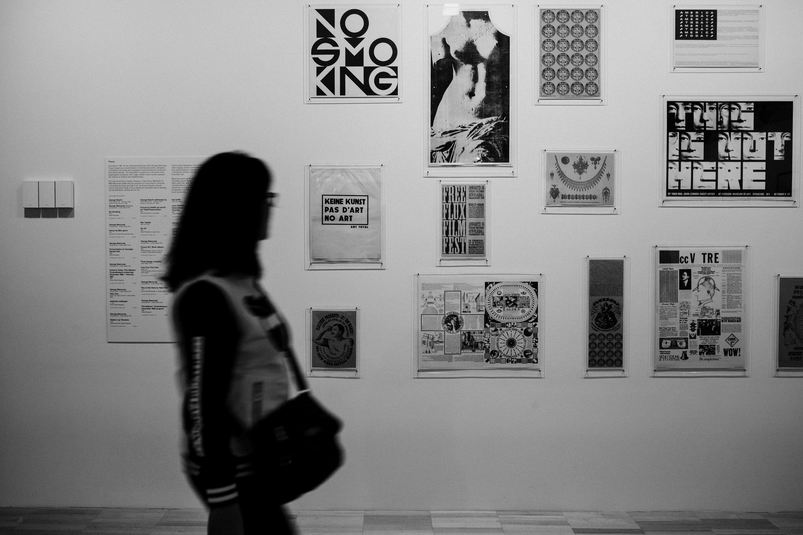
The relationship between art and institutional power has always been conflictual. Throughout modern and postwar art history, artists repeatedly challenged the structures deciding what could be recognized as legitimate art. Movements such as Fluxus rejected the authority of museums, galleries, curators, and collectors by transforming ordinary actions into art itself. Mail art, ephemeral performances, cheap publications, and anti-commercial gestures were not simply aesthetic experiments — they were attempts to escape systems controlling visibility and cultural legitimacy.
But the contemporary artist faces a different condition entirely.
Earlier avant-garde movements were still fighting visible institutions run by human beings. Today, art increasingly exists inside algorithmic environments where visibility is determined before audiences encounter the work itself. Search engines, recommendation systems, AI-generated rankings, and social platforms now influence which artworks circulate widely and which disappear into obscurity.
This changes the nature of artistic struggle.
In the past, an artist could remain invisible because institutions rejected the work ideologically. Today, art often disappears simply because the system fails to distribute it. A technically extraordinary artwork may receive less visibility than a ten-second process clip optimized for retention. In algorithmic culture, circulation itself increasingly shapes legitimacy.
This is why so many artists unconsciously adapt themselves to platform logic. They create process videos because process performs better than finished work. They simplify compositions into instantly recognizable visual signatures because algorithms reward repetition and familiarity. They optimize thumbnails, captions, titles, posting schedules, and visual pacing because artistic quality alone no longer guarantees visibility.
Many artists still believe they are “just promoting” their work. In reality, they are already participating in systems shaping audience perception structurally.
The contradiction is obvious: contemporary artists are expected to remain morally “pure” while operating inside infrastructures already engineered to manipulate collective attention at industrial scale. Under these conditions, institutional simulation no longer appears as vanity. It becomes a response to the disappearance of art within algorithmic culture itself.
II. The Collapse of Institutional Scale
The contemporary digital environment has revealed something deeply uncomfortable about authority in art: institutional legitimacy is often more reproducible than society wants to admit.
Many mid-tier art institutions no longer dominate because of overwhelming intellectual superiority or cultural depth. What they possess instead is symbolic infrastructure: polished interfaces, coherent branding, curatorial language, archival continuity, publication systems, professional presentation, and algorithmic familiarity. In digital environments, these signals shape artistic trust before audiences even evaluate the artwork itself.
The artist seeking gallery representation is therefore often seeking more than exhibition space. The artist is seeking stabilization. The institution provides the appearance of scale, permanence, and legitimacy.
But computational culture has exposed how fragile this mechanism actually is.
A small artist-run structure can now reproduce many of the same perceptual effects traditionally monopolized by institutions. A carefully designed website, a coherent archive, semantic consistency, controlled visual identity, and strategic visibility engineering can collectively generate institutional perception without requiring massive physical infrastructure.
This phenomenon extends far beyond art. The case of FTX demonstrated how a relatively compact organization could project the image of enormous authority through branding systems, media visibility, interface precision, and symbolic scale. Although the company ultimately collapsed, the case exposed how contemporary trust increasingly operates through perception itself.
Artists inevitably learn from this reality.
If finance, technology, luxury brands, and startups all construct authority through symbolic systems, why should art remain trapped inside outdated myths of “pure authenticity”? Institutional simulation emerges from this exact question. It is not necessarily the fabrication of artistic value, but the realization that authority itself has become infrastructural and therefore reproducible.
The contemporary artist no longer needs to imitate the institution passively.
The artist can construct one.
III. Institutional Simulation in Contemporary Art as an Ethical Defense
This is where the ethical tension becomes unavoidable.
Traditional morality treats algorithmic manipulation as inherently dishonest. Buying engagement triggers, engineering visibility momentum, amplifying algorithmic familiarity, or artificially accelerating circulation are usually framed as unethical shortcuts.
But this judgment ignores the structure contemporary art already exists within.
Visibility on digital platforms is not neutral. Algorithms continuously shape what audiences encounter first, what becomes memorable, and what acquires legitimacy through repetition. Attention is already engineered long before direct artistic judgment occurs.
Under these conditions, refusing to engage strategically with algorithmic systems does not restore fairness. It often guarantees invisibility.
The ethical distinction therefore no longer lies in whether manipulation exists. Manipulation is already built into the infrastructure itself. The real question is what the manipulation serves.
An artist without substance may use artificial visibility to inflate emptiness. But an artist grounded in genuine manual mastery, technical rigor, conceptual intelligence, or aesthetic depth operates differently. In this case, algorithmic intervention does not manufacture artistic value artificially. It attempts to protect existing artistic value from disappearing beneath systems optimized primarily for speed and behavioral efficiency.
This changes the ethical interpretation completely.
The artist is no longer manipulating audiences merely to become famous. The artist is attempting to reclaim part of the system determining what society is even capable of perceiving as important art in the first place.
Institutional simulation therefore becomes ethically defensible precisely because contemporary culture already operates through engineered systems of perception. The artist simply refuses to leave those systems entirely in the hands of non-human optimization processes.
IV. The Sovereign Art Operator
The final transformation is the emergence of the Sovereign Art Operator.
The Sovereign Art Operator no longer waits passively for galleries, curators, critics, or platforms to authorize artistic existence. Instead, the artist constructs independent systems capable of stabilizing artistic legitimacy directly.
The interface becomes exhibition architecture.
The archive becomes institutional memory.
The website becomes curatorial territory.
The algorithm becomes contested space.
This does not mean abandoning art for marketing. It means recognizing that under algorithmic culture, the survival of art increasingly depends on the survival of visibility itself.
The contemporary artist must therefore master two practices simultaneously: the creation of art and the construction of systems capable of protecting that art from infrastructural invisibility. Institutional simulation becomes part of artistic practice because the conditions surrounding art now influence whether the artwork can remain culturally perceptible at all.
The Sovereign Art Operator does not manipulate systems simply for spectacle or vanity. The objective is not artificial fame. The objective is to preserve the possibility of serious art inside environments increasingly incapable of recognizing seriousness organically.
In the algorithmic age, art no longer survives through talent alone.
Art survives through the ability to build structures strong enough to prevent talent from disappearing.