Why Physical Art is the Only Objective Truth in a Digital World
I. The Anchor: Physical Art as an Ethical Safeguard
In the current digital epoch, human existence is more prevalent online than in the physical realm. This shift has fundamentally reconfigured the structures of authority, particularly within the domain of Fine Art. Today, a genuine artist remains invisible until they accumulate a predetermined threshold of digital signals. This is a direct manifestation of Jean Baudrillard’s Hyperreality, where the simulation (the digital signal) precedes the real (the artwork).
However, the master does not look outward for validation; their worth is determined through a rigorous process of internal appraisal. It is a fundamental betrayal of the craft to pivot one’s vision to satisfy the fluctuating whims of a distracted crowd. Yet, we must face the structural reality: the masses do not follow quality; they follow the crowd. As observed in Postmodern consumer theory, the public requires a pre-validated signal of authority—whether composed of genuine users, automated bots, or purchased engagement—to grant their attention.
If the crowd is conditioned only to recognize the “signal” of popularity, then the Sovereign Operator simply programs that signal into existence. Utilizing “Grey Hat” tools is not an act of seeking the crowd’s love, but an act of commanding their gaze. By engineering a profile that mirrors the markers of mass-market success, the artist bypasses the need for persuasion. Whether the engagement is organic or manufactured is irrelevant; the essential truth of the art remains unchanged.
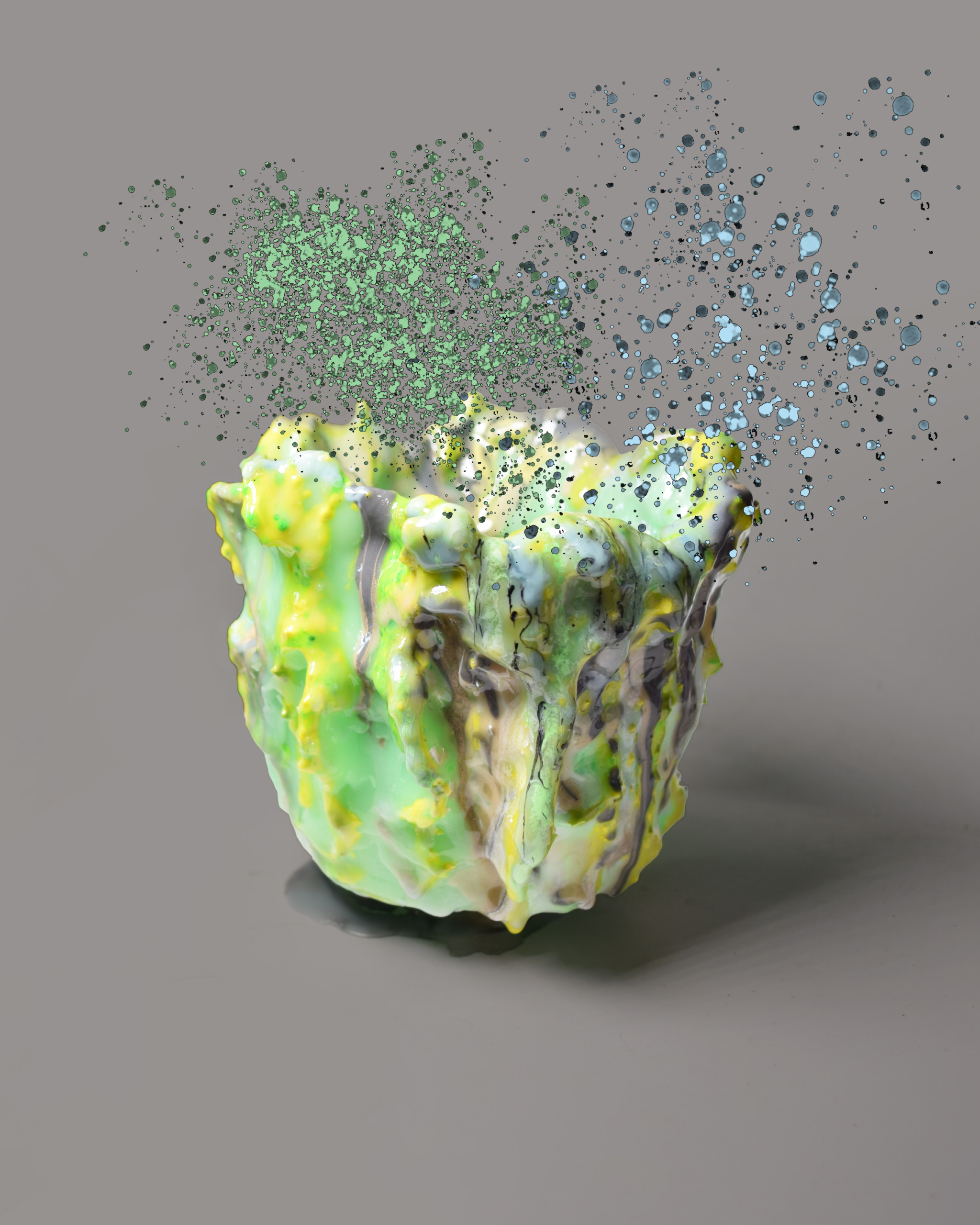
This foundational layer acts as a definitive boundary. It distinguishes the mere “shifter” from the Genuine Artist, who uses these tactics as a necessary shield to protect the sanctity of their creation. Here lies the departure from traditional Postmodernism: while the digital realm suffers from infinite inflation and the “death of the real,” the Physical Object stands as the ultimate “Objective Proof.” It is the Red Line Biology—the only element that cannot be automated because it remains bound by the friction of reality and the scarcity of biological time.
II. The Halo: Engineered Fame as a Non-Synthetic Medium
In the era of Web 2.0, human taste has been homogenized by the algorithm. The “fair competition” of the past is a myth; the digital landscape is a pre-programmed machine that favors the loud and the repetitive over the profound. This mirrors Guy Debord’s Society of the Spectacle, where all direct experience has been alienated into a world of images.
Therefore, the “Fame” generated through Grey Hat tactics—strategic seeding, perception management, and algorithmic orchestration—is not a “fake” layer. It is a “Digital Halo”—an invisible coat of varnish applied to the work. This manipulation is a necessity because, in a world where attention is dominated by corporate monopolies, the artist cannot wait to be “discovered.”
To refuse the use of Grey Hat tools is to accept invisibility. If the machine requires “fame” to grant visibility, then the Sovereign Operator simply manufactures that fame as a technical component of the work. This “Halo” is not a deception; it is a bridge.
This is where Algorithmic Postmodernism reinterprets Roland Barthes’ classic postmodernist decree: “The Death of the Author”. In the traditional sense, the author must disappear to let the text speak; in AP, the author deliberately vanishes as a physical entity to reappear as a ghost in the machine. By utilizing Grey Hat tactics, the artist achieves a “physical disappearance”—becoming an invisible architect who constructs a hyper-real environment around their persona.
Unlike the nihilistic view of the Spectacle, the Sovereign Operator uses the Spectacle to protect the sacred. While the artist’s physical presence is withdrawn, their influence is amplified through the engineered “Halo.” It is the force that compels a distracted public to finally stop and look at a masterpiece they would otherwise have been programmed to ignore. The author is “dead” in the tangible sense, only to stand sovereign over the digital simulation that dictates truth to the masses.
III. The Convergence: The Transmutation of Simulation into Reality
The ultimate objective of Algorithmic Postmodernism is the moment of Convergence. When the belief of the crowd—orchestrated through technical means—reaches a critical mass, the boundary between “the tactic” and “the truth” dissolves. This utilizes the Postmodern mechanic of Simulacra—where the model of a thing becomes more real than the thing itself—but for a counter-revolutionary purpose.
If the public believes in the authority of the work, that authority becomes an Objective Reality. In this state, it does not matter if the initial momentum was triggered by a “Grey Hat” seed. At the end of the process, the collective perception has been altered. The artwork becomes an immutable entity, not because it is stored on a server, but because it has been permanently etched into the social consciousness and anchored by its physical existence.
At this stage, persuasion is no longer required. The artist has not simply sold a product; they have successfully occupied a territory of the mind. The result is absolute: the truth of the work remains unchanged, regardless of the tools used to reveal it. Mastery is preserved, the system is commanded, and the art stands sovereign, anchored in the physical world while dominating the digital simulation.