So Much for Artistic Indifference
The founding open call of Hand-Fetish-Projects produced more than expected.
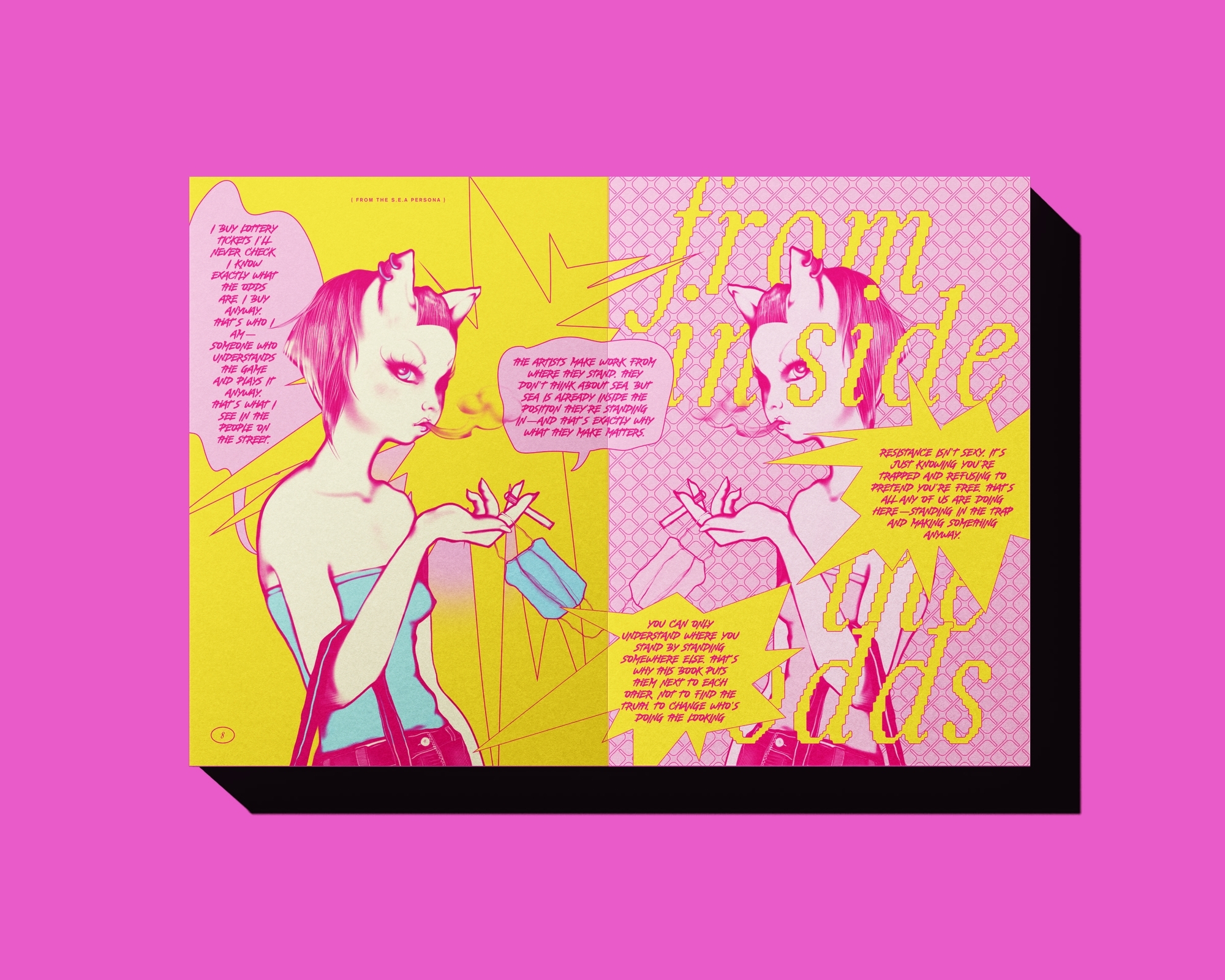
I have to admit, I am rather excited that the founding Southeast Asian Art Open Call for Hand-Fetish-Projects has finally produced something genuinely interesting. To be honest, I was not expecting much. I had already prepared myself for indifference; partly because the subject is Southeast Asian, and partly because, let’s face it, there probably are not that many artists actively making work about this region, especially from within its own rather complicated cultural mess. I was quite prepared to be ignored.
Fortunately, it seems the call managed to pick up a particular frequency. The number of submissions was not overwhelming, but the quality was. I have spent a considerable amount of time reading, looking, and trying to understand what each piece was actually doing; especially the works that leaned heavily toward concept. Naturally, I remain interested in beauty, but perhaps less than I used to be. As someone who is fundamentally rather aesthetic-minded, I have become increasingly bored by surfaces alone. AI has, among other things, made the worship of visual appearance feel remarkably cheap. I spent a particularly significant amount of time looking closely at the work of the British artist Jason Haynes, whose practice, at first glance, seems to have little to do with S.E.A. Yet in the end, I still found a way to connect his work to the book. I genuinely learned a great deal from spending time with and observing work that is so strongly driven by concept.
We are now working on the layout and talking with publishers, with the hope of finding a European publishing partner for the project. Vietnam, after all, remains a particularly unforgiving place for artists; people have been imprisoned for saying the wrong thing, and decades later, the basic problem has hardly disappeared. Perhaps this is precisely why independent platforms, publications, and artists need to keep making their own spaces; not because anyone asked for permission, but because waiting for permission has never been a particularly productive artistic strategy.
![[8-July-2026] The first time Algorithmic Postmodernism was discussed in public — on Reddit.](https://hfp.gallery/wp-content/uploads/2026/07/Hoang-Dan-Pham-and-Postmodernism-philosophers.png)