Should We Join in The Game We're Set To Be A Loser? Obviously Yes
There is a particular kind of humiliation reserved for artists from peripheral regions. It is not the humiliation of being ignored. That part is almost routine. The more efficient humiliation is subtler: it is being taught to interpret every rejection, every failed submission, every awkward silence from a foreign platform as proof that your work simply “isn’t good enough.”
No one needs to insult you directly. The system does it for free. It hands you a polished vocabulary of merit, professionalism, curatorial rigor, international standards, and artistic relevance, then quietly invites you to conclude that if you cannot pass through its gates, the fault must be yours. Maybe your work is too provincial. Maybe your statement is too plain. Maybe your references are too local. Maybe you, unfortunately, were born in the wrong place and failed to correct it with enough theory.
That is the game. And like most elegant games, it works best when the losers blame themselves.
I. The aesthetic insecurity of compressed modernity
One of the stranger conditions of being in Southeast Asia is that we did not enter contemporary visual culture through the same route as the places that now dominate it. We did not move neatly from postwar consumer culture to early internet subcultures to niche digital communities to platform capitalism. Our transition was far messier, faster, and far less generous.
A large part of the region jumped from material scarcity into accelerated digitization with very little time in between. By the time a meaningful middle class could participate in global consumer culture at scale, many of the visual languages circulating online had already gone through several generations of mutation elsewhere. What arrived to us was often not the slow formation of those cultures, but their finished products: the merchandise, the aesthetic signals, the approved taste objects, the neatly packaged symbols of belonging.
This is where Labubu becomes useful—not because Labubu itself matters that much, and certainly not because the world needs one more essay pretending a toy is a civilizational turning point. It is useful because it reveals a pattern.
Labubu enters many Southeast Asian contexts not as part of a long, locally embedded history of toy culture, internet subcultures, underground illustration, character design, retail display culture, and fandom economies. It arrives as a completed object of desire: already amplified by celebrity, already legitimized by circulation, already wrapped in the comforting glow of “the world has decided this is cool.” In other words, by the time it lands here, the object is no longer just an object. It has become a certificate.
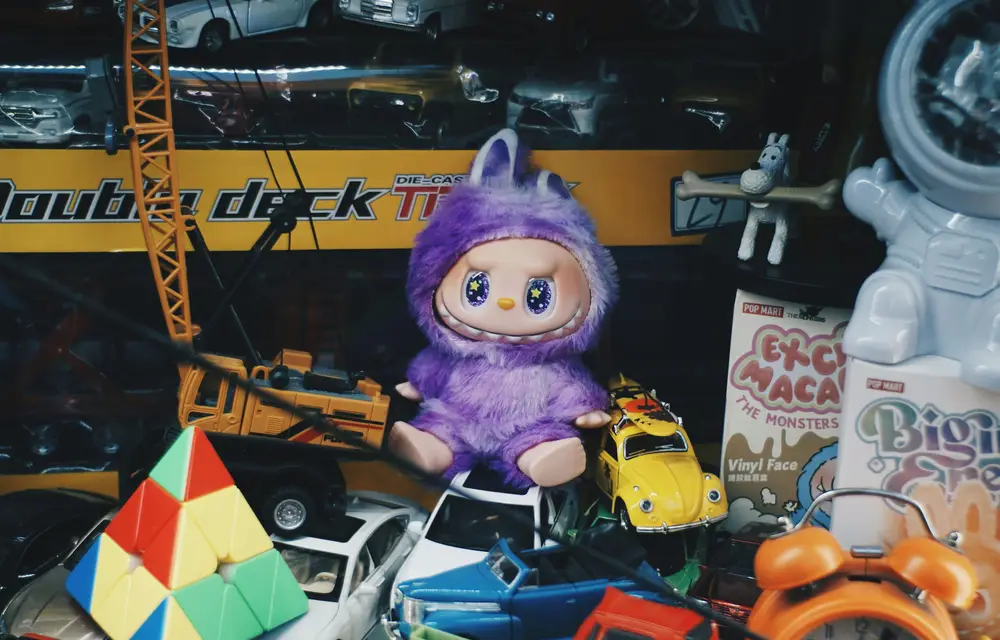
The problem is not that people buy it. The problem is not even that people buy it because Lisa touched it, and therefore it must contain some trace of divine aesthetic truth. Pop culture has always been ridiculous. That is part of its charm. The problem is what happens when a society repeatedly encounters aesthetic forms in this finished, pre-approved state. You stop asking where they came from, what traditions produced them, what histories shaped them, what kind of visual world they belonged to before they became commodities. Instead, you learn to read value through circulation itself.
Who is holding it?
Which celebrity posted it?
Which platform is selling it?
Which country exported it?
How expensive is it?
How difficult is it to obtain?
How efficiently does it signal that one is not embarrassingly local?
This is not taste. This is outsourced confidence.
And once that habit settles in, it does not remain confined to blind boxes and collectible toys. It becomes a wider cultural reflex. Aesthetic value begins to look inseparable from external validation. What has already been approved elsewhere starts to feel inherently superior to what emerges from within the region itself. The imported object does not just circulate; it also teaches the public how to judge.
This is where aesthetic insecurity begins to harden into something more structural. A region that receives many cultural forms as completed products, rather than as lived histories, becomes especially vulnerable to confusing visibility with value. It mistakes distribution for depth. It mistakes foreign circulation for legitimacy. And sooner or later, that same reflex returns home and starts evaluating local artists with borrowed eyes.
II. The game is rigged long before the artist uploads the portfolio
The same mechanism reappears, in a more polished form, when artists from peripheral regions step into the international art world.
An artist in Vietnam can spend years building technique, intuition, and visual intelligence through actual practice—through materials, through mistakes, through the long humiliating labor of making bad work until something alive begins to emerge. That part is real. But the moment the work is brought into a transnational art platform, the criteria shift. Suddenly the artwork is no longer being encountered only as an object. It must also arrive as a statement, a discourse, a position, a well-behaved paragraph of self-translation.
And of course, translation is never neutral.
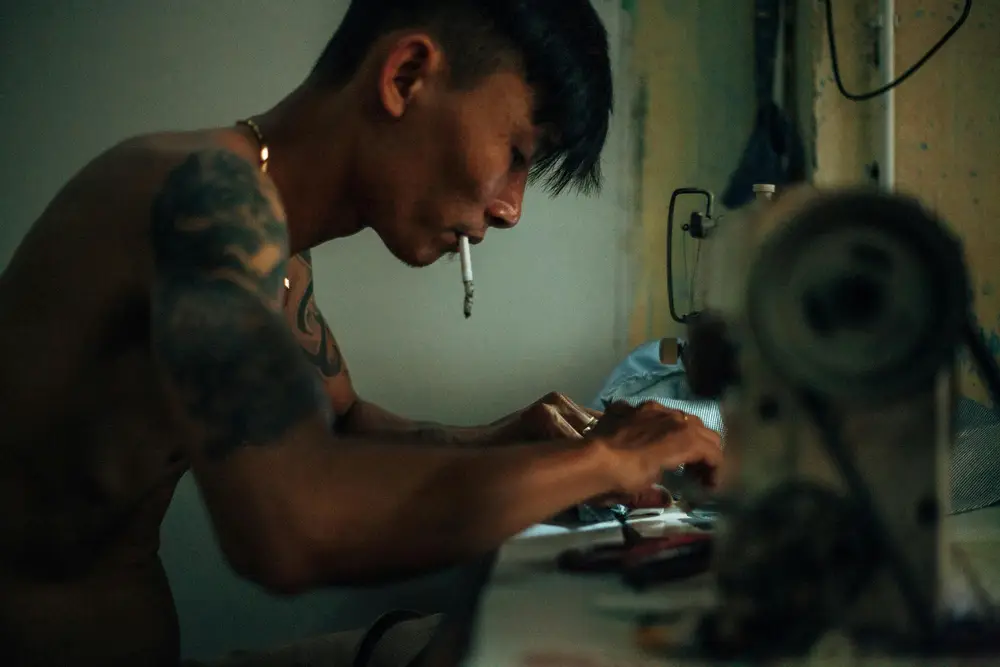
In Southeast Asia, even the indie scene rarely has the conditions to split labour from artistic practice. It is hard to build an autonomous layer when the wider culture is still caught in a half-digested illusio of artistic legitimacy.
The contemporary art world likes to present itself as a space of openness, experimentation, and critical sophistication. What it often is, in practice, is a machine for rewarding legibility to the center. Not always. Not universally. But often enough to become a pattern.
This does not mean every rejected artist is secretly brilliant. It does not mean every curator, gallery, or platform is part of some grand conspiracy against Southeast Asia. Some artists are underdeveloped. Some portfolios are weak. Some statements are bad because they are, in fact, bad. That is not the issue.
The issue is that these systems are repeatedly framed as if they were neutral detectors of quality, when in reality they also test for a whole set of secondary competencies: fluency in a certain kind of theoretical language, familiarity with particular institutional references, the ability to narrate one’s own work in terms that already sound internationally legible, and proximity—geographic, educational, linguistic, or social—to the discourses that the platform already knows how to reward.
For artists working from Vietnam or elsewhere in the region, this matters. It matters because the playing field is not merely uneven in the practical sense of shipping costs, weak infrastructure, or lack of access to collectors. It is uneven at the level of interpretation itself.
The artist is not only asked to make work. The artist is asked to produce the correct explanation of the work, in the correct accent, inside the correct intellectual weather system.
And when that translation fails, the failure is very quickly internalized as a moral and artistic failure of the self.
Maybe I am not sophisticated enough.
Maybe my work is not contemporary enough.
Maybe I do not know enough theory.
Maybe I should learn to write like someone who has spent the last decade politely suffering in a London seminar room.
This is where the game becomes especially efficient. It does not simply exclude. It persuades the excluded that the exclusion is objective. It turns structural asymmetry into personal inadequacy.
That is why so many artists from peripheral contexts end up feeling ashamed in front of platforms that were never designed for them in the first place. They enter spaces whose norms, references, and prestige economies were built elsewhere, then read their inability to move smoothly within those spaces as proof that their practice lacks value.
But the inability to perform comfort inside a foreign institution is not the same thing as artistic failure. Sometimes it is just what structural distance looks like.
III. The privilege of partial illiteracy: HFP curatorial philosophy
Pierre Bourdieu had a useful word for the spell cast by institutions and their rituals: illusio. The term refers to the belief that the game matters, that its stakes are natural, that its rewards are meaningful on the terms it has set for itself. A field only has real power over you when you believe in its categories deeply enough to mistake them for reality.
The cruelty of the global art game is not simply that it excludes artists from peripheral regions. Exclusion is old news. The more effective cruelty is that it trains them to use the system’s own measuring tools against themselves. It convinces them that if they cannot satisfy the language, rituals, and validation structures of the center, then the problem must be a deficiency in the work, rather than a mismatch between a local practice and an imported apparatus of recognition.
Seen from that angle, growing up outside the center can produce a strange advantage. Not a moral advantage, not a romantic one, and certainly not the charming innocence some people like to project onto “the margins.” Nothing so flattering. The advantage is colder than that.
If you were never fully initiated into the sacred language of the game, you are slightly less likely to worship it.
It is like overhearing a language you do not speak fluently. Native speakers are caught inside the meaning of every phrase; they hear prestige, hierarchy, nuance, coded affiliation, career possibility. You, meanwhile, hear the mechanics. You hear the rhythm, the repetition, the formula, the way certain sounds unlock certain doors. You notice how often authority depends not on insight but on fluency in a very specific performance of intelligence.
This does not mean theory is useless, or that academic language should be burned in a dramatic bonfire somewhere behind a biennale. It simply means that distance can clarify function. When you are not fully seduced by the ritual, you are sometimes able to see it as infrastructure rather than destiny.
That distinction matters in curatorial practice.
From Hand-Fetish-Projects’s point of view, the task is not to pretend the international art system does not exist. It exists. It indexes, circulates, archives, ranks, legitimizes, and occasionally opens doors. It can be useful. It can generate visibility, context, backlinks, institutional references, and all the other little digital sacraments that keep cultural objects moving across the internet. Refusing to touch any of it in the name of purity is not resistance. It is often just another route to invisibility.
But usefulness and authority are not the same thing.
In practice, what Hand-Fetish-Projects (HFP) has learned from watching these dynamics is fairly simple: art platforms, curatorial jargon, academic discourse, and international visibility should be treated as tools, not as final judges of value. They can be used as infrastructure. They should not be mistaken for truth.
This is not a rejection of context, or language, or critical framing. It is a refusal to let those things become substitutes for the work itself.
Once the fog of prestige is pushed aside, a more basic question returns: does the work hold? Does it have internal structure, visual intelligence, pressure, conviction, formal coherence, emotional charge, material discipline—whatever combination of forces makes an object feel genuinely alive rather than merely well-described? Has the artist actually built something, or merely learned to escort a mediocre object into the room with excellent vocabulary?
That question is not anti-intellectual. If anything, it is the minimum requirement for intellectual honesty.
In HFP’s curatorial practice, this means trying to keep a deliberate distance from the reflex that equates external recognition with artistic worth. It means being willing to use the infrastructure of the global art world when necessary—to submit, to format, to optimize, to circulate, to make oneself legible enough for the machine to process—without confusing that legibility with the actual value of the work.
Because no, we do not get to opt out of the internet. No, we do not get to float above global circulation like some morally superior ghost. And no, the answer is not to retreat into a wounded localism and pretend every foreign system is fake.
The answer, unfortunately, is less glamorous.
Yes, join the game.
Submit the work. Use the platform. Take the backlink. Exploit the metadata. Let the machine index your existence if it must.
But do it without kneeling.
The point is not to reject the game. The point is to stop confusing it with judgment. Once that confusion is gone, something useful becomes possible: you can participate in the infrastructure without surrendering your criteria to it. You can learn the rules without mistaking them for natural law. You can enter the room without asking permission to exist there.
And for artists working from places that were never meant to be the center, that may be the closest thing to freedom currently available.