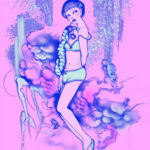
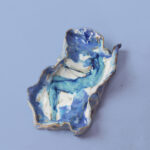
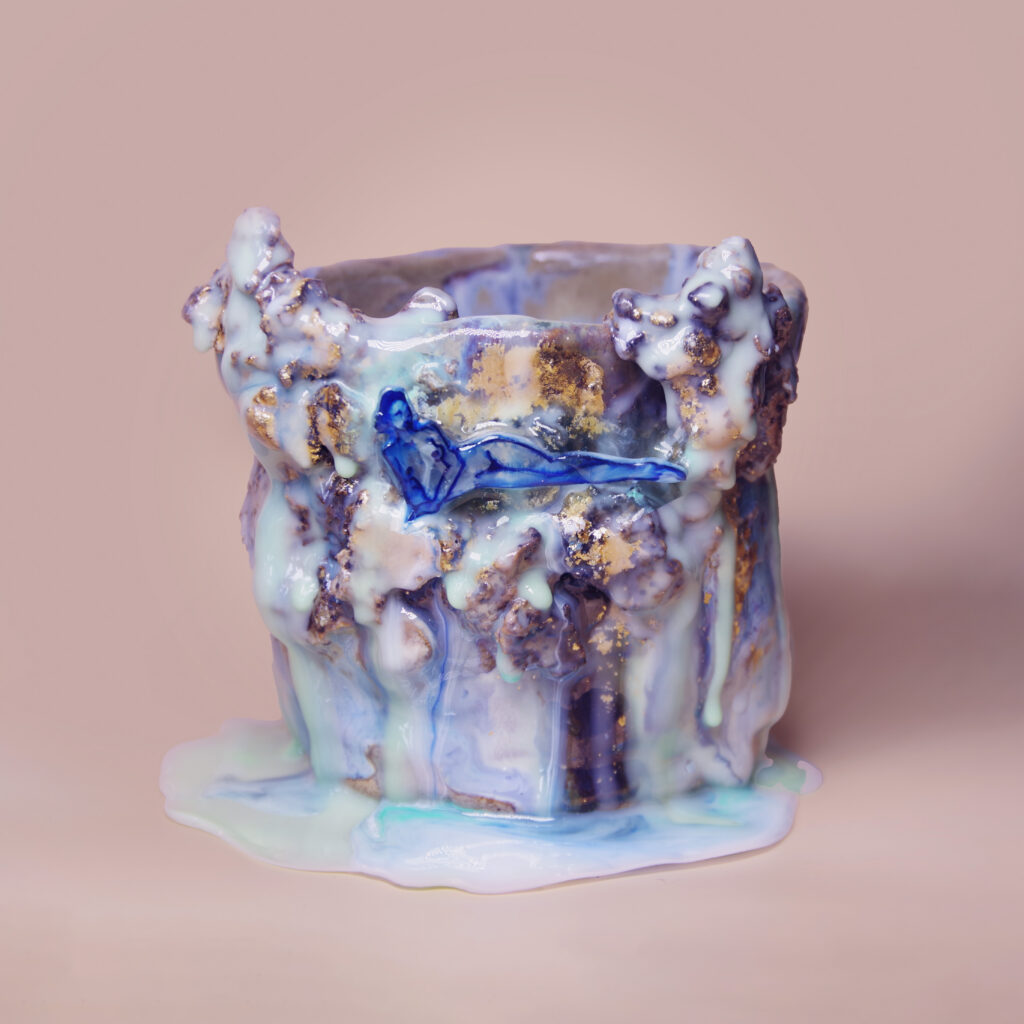
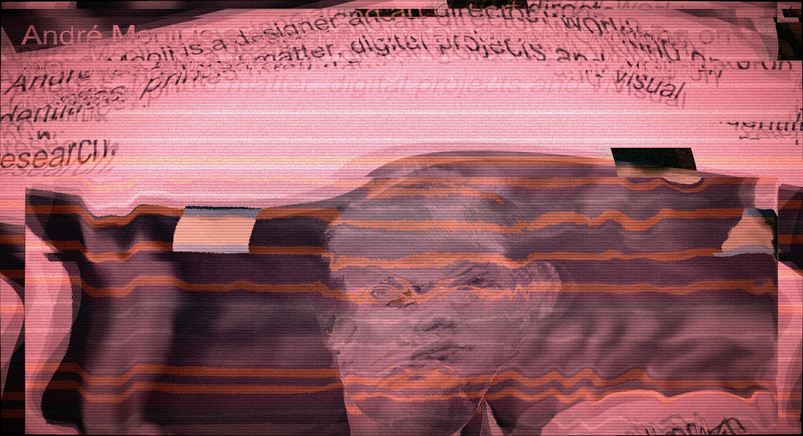
Gối — Hot & Hotter Seasons — Digital Painting — The painting demonstrates how digital visual language can merge with traditional illustration without losing its artistic presence. Although the image strongly evokes the atmosphere of the AI era, no AI was involved in the artist’s process. The artist intentionally chose a method of flat image construction that she believed AI still could not fully imitate, creating a quiet tension between handmade authorship and synthetic visual culture. In this sense, AI indirectly pushes human art toward other formal directions even through absence, turning the work into a subtle form of silent confrontation. Beneath its neon surface, the painting also carries a nostalgic mourning for the decline of Saigon’s old bourgeois world, allowing it to stand in emotional opposition to the flattened unreality of speculative digital futures. .Gối — Bích Khê Tray — Ceramic — Bích Khê (1916–1946) – a central figure of Vietnamese Symbolism – did not depict women as physical subjects but as spectral disturbances moving through language. In Tranh Lõa Thể, the body dissolves into perfume, light, rhythm, and fever, becoming less a human figure than a psychic apparition briefly intercepted by poetry. In an era where AI can already imitate poetic structure through statistical language prediction, Symbolist poetry remains difficult to fully replicate precisely because of its unstable symbolic layering, overlapping metaphors, and irrational emotional syntax. Decades later, Gối produced this tray as a sensory transfer device, isolating the poet’s hallucination and migrating it into physical form. The artist ultimately frames the object as a derivative work not of narrative, but of Symbolist sensation itself. Asahi Rokuji — Fission — Experimental Photography — The work combines photography with digital manipulation while refusing the polished visual logic now common in AI-generated imagery. Its awkwardness is intentional. Distortion and flatness are left exposed instead of corrected, turning visual discomfort into part of the image’s structure. Perhaps in the AI era, simply continuing to photograph real human beings already feels unusual enough, without needing technical spectacle to justify it. The piece quietly suggests that human image-making may begin separating itself from synthetic culture not through perfection, but through forms of deliberate instability.Gối — Soft Overflow — Mixed media — This mixed-media object treats synthetic resin as a counterfeit bodily fluid, allowing it to spill across ceramic surfaces as though the material itself were undergoing orgasmic collapse. As AI gradually extends its synthetic organism into more and more territories of visual culture, sculpture of this nature still remains strangely difficult to neutralize. Contemporary visual culture is increasingly dominated by polished forms engineered for frictionless circulation, where artworks are expected to behave almost like luxury interface design. As AI gradually extends its synthetic organism into that ecosystem, works built around instability become harder to economically discipline. This object survives precisely because it leaks. Its humanity exists not only in the emotion it evokes, but in the way the material itself refuses mechanical control.. Alexey Velikorodny — Aya Shalkar —Photography People once questioned the necessity of painting after the invention of photography. Today, a similar question begins to surround photography itself, as AI systems become increasingly capable of reproducing nearly every visual component associated with photographic image-making. What, then, continues to shape our immediate recognition of human presence within independent photography? Is it the model’s micro-expressions, or forms of imperfection that emerge unintentionally rather than being strategically constructed as aesthetic response? The photograph unintentionally becomes a compelling reminder of why certain human-made images continue to feel immediately recognizable.
Hi, Hand-Fetish-Prpjects® currently has no call for this category. Please check back later or subscribe to get notified when this open call starts accepting submissions.