Context Curation: What If the Context Is the Artwork?
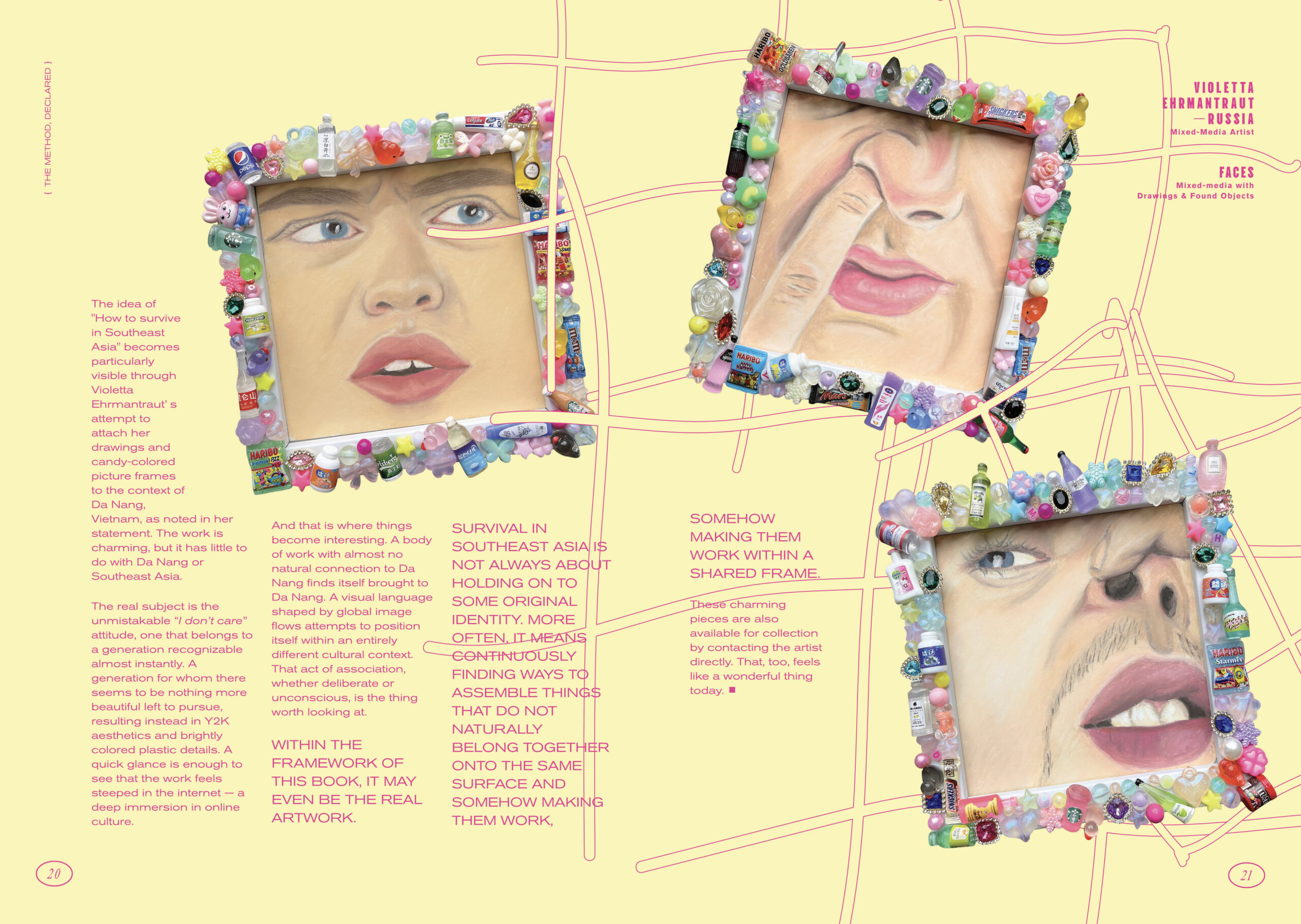
A Frame and a Practice
Algorithmic Postmodernism starts with a simple observation: people often believe something before they have examined it. A work appears in a search result, an artist has an impressive biography, a claim gets repeated enough times. The conditions for belief are already in place before anyone looks closer. Algorithmic Postmodernism names this condition and takes a position on it. Human beings should retain the power to decide what matters, rather than handing that decision entirely to non-human systems. The position has been stated elsewhere on this site, in a single line.
Yet resisting AI by making things by hand is a rather ordinary response. Even the most painstaking human labour can be swallowed by the same systems it seeks to resist, repackaged as content and fed back into circulation. AI does not need to consume the artwork itself; the documentation of its making, the story of its maker and the spectacle of human effort are already enough to keep the machine running. If even the act of resistance can become another source of content, perhaps the answer lies elsewhere: in finding a new artistic material, or, more ambitiously, in proposing an entirely new form of art. For Hand-Fetish-Projects® (HFP), which has always looked for new forms, that search found an answer it had not planned: context curation, an art practice in which the context itself becomes the work.
The Work Is in the Context
If AI can generate almost anything, what makes an art practice meaningful?
Rather than imposing their own interpretations on artists’ work, as conventional academic curators often do, HFP works with the biographies and descriptions artists provide. These accounts bring the artists’ own intentions and claims into the curatorial process. The curator then constructs relations between the artworks, their makers and the accounts they submit. The resulting context is not simply a container for the artworks. It is the work itself.
The distinction matters because a document about human practice and the practice it describes are not the same thing. AI can generate a biography, invent an artistic history or produce a convincing account of an intention. But the document alone does not tell us what a particular person intended by submitting it, what they chose to claim in that situation, or how that decision relates to the work and the context in which it appears. Even when AI generates the text, the decision to use it and submit it remains part of the person’s action.
HFP takes these actions and claims as material, without assuming that they are necessarily truthful or inherently valuable. Their significance emerges through the context in which they are placed.
A Claim Is Still Material
An artist’s biography is a claim about their own history. It may be accurate, incomplete or invented. HFP works with the biographies artists provide, without treating publication as an automatic endorsement of every statement they contain. This raises a question: if an artist invents part of their biography, can that invention still have a place in a work of context curation?
The answer depends on the context. A fabricated biography does not acquire value simply because someone chose to write it. Nor does publishing it make the claim true. What matters to the practice is that the artist chose to make and submit that claim, and that it enters into a particular set of relations within the work.
An invented biography may become part of the context constructed around an artist’s work. It can be read alongside the artwork, the accounts of other artists and the publication’s curatorial structure. The act of inventing the biography becomes material in its own right, while its significance depends on the relations established within the work. Remove the same biography from that context and place it in a job application, an institutional record or an unrelated publication, and it may become worthless or actively misleading. The biography has not changed; the context has.
This is not an argument that truth does not matter. It is an argument that value does not exist independently of the conditions under which something is read. A claim can function as material in one art practice without becoming valid evidence elsewhere. Context curation does not make every claim meaningful, and it does not grant artists immunity from the consequences of what they claim. It constructs a particular context in which those claims can acquire a particular significance.
This also marks a boundary between presenting a claim and vouching for it. HFP presents artists’ accounts as their own, without turning them into verified facts merely by publishing them. The curator is responsible for the context in which the claims are placed; the artists remain responsible for the claims they make. Neither responsibility cancels the other.
SEAthrough Issue 01
SEAthrough Issue 01, published in October 2026, was the first instance of context curation. The publication brings artists into relation through a curatorial structure organised around Southeast Asia, without requiring every artist to represent the region in the same way. Southeast Asia serves as a position from which to read the works, not an identity each artist must perform.
The publication constructs its context through several elements: the artworks themselves, the biographies and descriptions provided by the artists, and the relations established between them through curation. None of these elements has to carry the entire meaning alone. Their significance emerges through their coexistence within the publication.
HFP checked the biographies in Issue 01 as any publisher must before selling a book. The practice itself does not depend on that check. There is no claim that the artists fabricated their histories. But suppose one had. What then? The biography would still have entered a context in which it could be read in relation to the artist’s work and the other material in the publication. That would not make the invented history true, nor would it make the same biography useful outside the publication. It would make the act of inventing it part of the material being curated.
In other words, even a fabricated biography would not automatically destroy the work. HFP is not certifying a collection of life stories; it is constructing an art context. If a lie can hold a place within that context, the lie does not become a fact. It becomes part of the work. Anyone who needs it to remain true can take it elsewhere.
No Single Centre
Context curation does not require every work to serve the same theme, identity or standard. The relations between works are constructed from what artists bring, rather than imposed in advance by a single idea that everything must illustrate. The curator still makes decisions, and those decisions shape how the works are read. There is no claim to neutrality here; the point is that the context is constructed through those decisions rather than treated as a natural or universal order.
This is one point of contact with postmodern thought, which questions the authority of a single centre from which meaning must be determined. Algorithmic Postmodernism extends that concern to the computational systems that shape what becomes visible and believable. Context curation puts a related position into practice by allowing works to enter a shared context without requiring them to surrender their differences.
