Where Is Hand-Fetish-Projects?
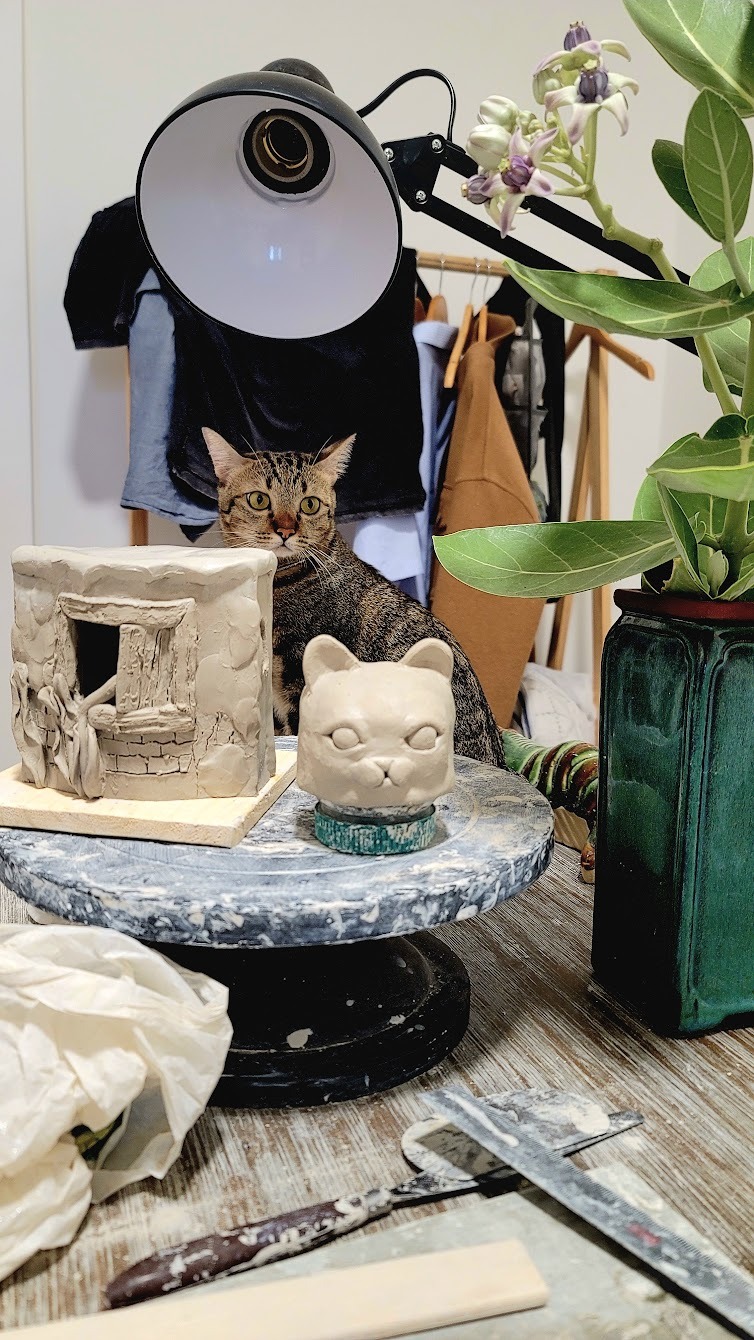
A Decentralized Art House.
The question I hear most often is: “Where is Hand-Fetish-Projects (HFP)?”
I usually eliminate Vietnam from the answer first.
Not because HFP has nothing to do with Vietnam. I live here, much of the work is produced here, and the studio operates here. But calling HFP a Vietnamese organization simply because its founder happens to sit in Vietnam seems rather ridiculous to me. Not to mention that the founder's family, presumably an important source of emotional support for a human being, doesn't even live in Vietnam. Especially when the country's own administrative, legal and commercial systems are among the very things making it extremely difficult for that founder to do the work in the first place. I find it groundless to assume that the location creating these obstacles should automatically be entitled to define the organization.
The United States is where HFP is establishing its legal entity and trademark registration. In a way, HFP is happy to be America's stepchild: legally acknowledged, but with no intention of moving into the family home. We have no particular interest in hiring an American workforce, renting warehouses or keeping inventory there. Production and fulfilment make more commercial sense in places with better conditions, such as China, before the goods are shipped to customers around the world.
What we want from Daddy America is legal identity, not operating expenses. An American label gives HFP an immediately recognizable institutional and commercial standing. And let's be honest: in the eyes of many people, "legitimate" is often just another way of saying "US-based" or "Western-based".
I occasionally experience what I can only describe as an existential crisis of geography. I often feel that what I do is something nobody here understands or cares about, and something nobody in the US sees or cares about either.
At first, the idea of globalization sounded rather attractive. It seemed to promise a way to scrub away the provincial dust and allow the founder to step out into the wider world. But the reality has been less romantic.
I see the American landscape as having only two social classes. At the top are the MoMA types: pretentious and obsessed with institutional legitimacy. At the bottom are the working-class masses, who simply want cheap goods from China. The middle class, which I consider the most interesting class, is scattered and too few in number. To me, they are the ones who have not yet been corrupted by either wealth or poverty, and can still appreciate beauty in its simplest form.
If I were to force HFP into the US market, I would remain an outsider, just as I am in Vietnam. Different circumstances, same result.
This is why I use the term decentralized to describe HFP. Not in the blockchain sense; I am referring to a structure without a single geographical centre. The founder may work in Vietnam, a publication may be printed elsewhere, contributors may live across several continents, and commercial operations may require a separate legal presence. These are different locations serving different functions. There is no particular reason to force them into one address simply to make an organization easier to classify.
For independent art practitioners, I think it is time to question some rather outdated assumptions. People are still operating with concepts inherited from the analogue era, while proudly announcing that they are embracing AI. Why does an art house still need a physical building with paintings hanging on its walls to qualify as an art house? The experiential value of a digital platform and a physical space cannot simply be compared, yet both can create a space in the viewer's mind.
HFP can arrange an exhibition space without having to pay rent for a permanent venue. I can be in Vietnam and organise an exhibition in Thailand, Singapore, China, the United States or elsewhere through local partners. Why should I own or rent a building just to welcome the people who happen to walk through its doors? When I think about the possibilities that contemporary technology offers, that idea of an art house seems remarkably outdated. An art house should be defined by the space it creates for art and its audience, not by the property it occupies.
HFP does not need a physical headquarters or a permanent gallery. Yet the question “Where is HFP?” keeps returning, as if a geographical location could tell us something definitive about the quality or legitimacy of an art organization. This assumption is rather old-fashioned, to put it mildly. HFP has no intention of providing a single geographical answer simply to satisfy it.
HFP is being built this way. It is an independent contemporary arthouse, publishing platform and art infrastructure based in Southeast Asia, with operations that extend beyond a single territory. Its geographical position is relevant, but it is not a geographical address waiting to be discovered.
So, where is Hand-Fetish-Projects?
It is on your mind.
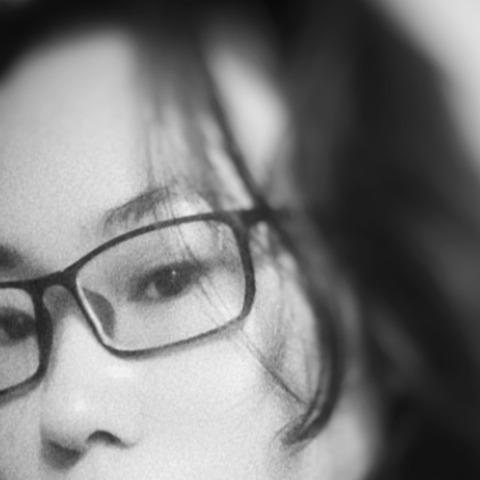
An artist and cultural operator based in Southeast Asia.
Her work spans visual art, publishing, and independent institutional practice, with a particular interest in contemporary image culture and the systems that shape artistic visibility.
She founded Hand-Fetish-Projects in 2024.